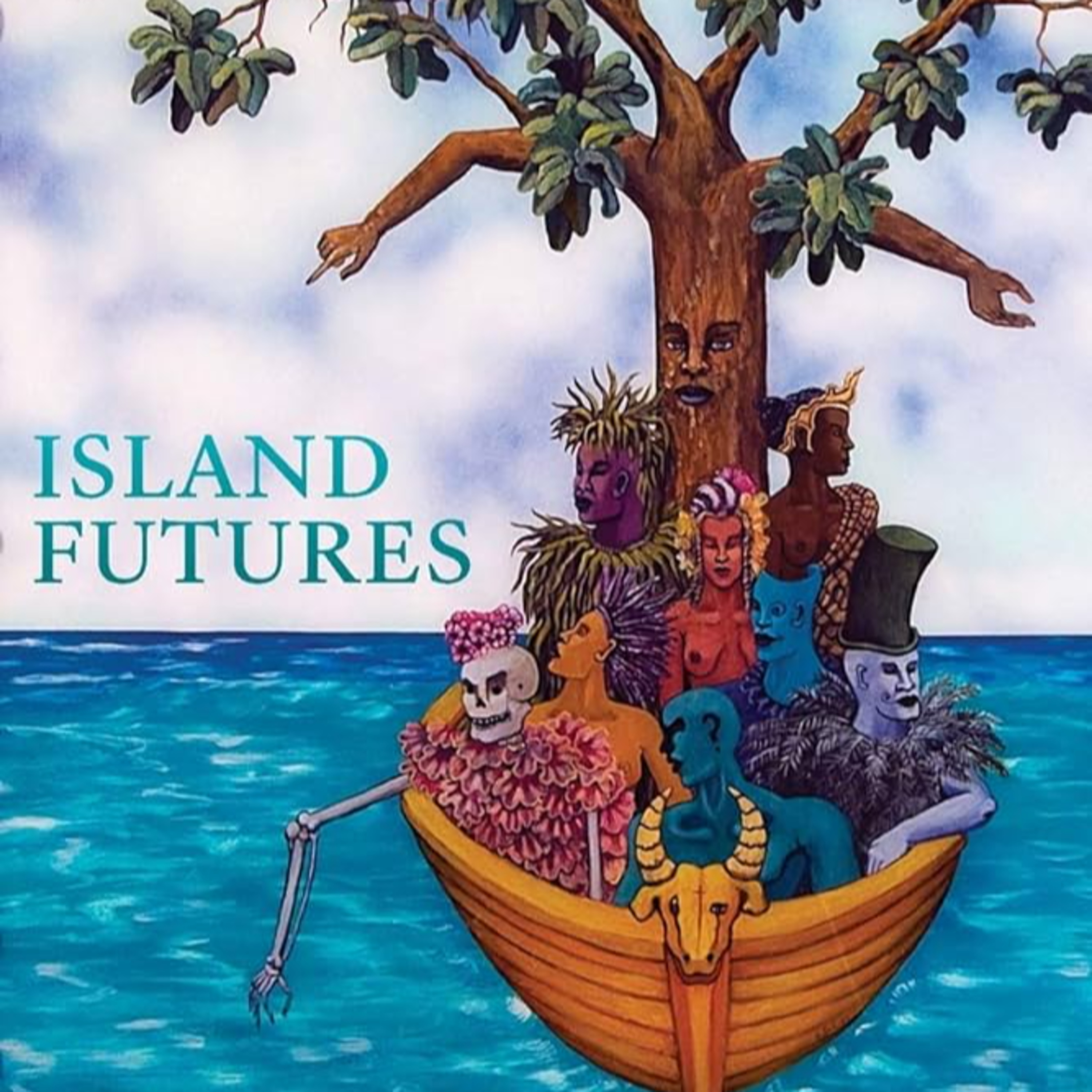
Island Futures: Caribbean Survival in the Anthropocene
Key points
- For many Caribbean thinkers Haiti is a talisman: the first to face isolation, embargo, debt and foreign interference, and the source of a culture rooted in Vodou, the lakou and the land.
- Sheller calls those who cannot choose how they move the "mobility poor"; after the earthquake aid money could have gone straight to survivors by mobile transfer, yet aid agencies kept control of it.
- Her Drexel University team in Léogâne found a piped water system broken before the quake; free trucked water then undercut local water sellers and left camps dependent.
- Uncoordinated groups paved Léogâne's roads and later dug them up for sewers; most worked in English or French and shut Haitians out of decisions, though one workshop drew 76 people from more than 40 local organizations.
- An eviction of a displaced persons' camp in Léogâne showed power gaps among Haitians too, between people at home and returnees from the diaspora.
- She links each kind of power in the book to a lwa, Danbala Wedo for the cables and satellites of digital power, and names the abuse by aid workers and UN peacekeepers as the sexual economy of disaster.
In Island Futures Mimi Sheller delves into the ecological crises and reconstruction challenges affecting the entire Caribbean region during a time of climate catastrophe. Drawing on fieldwork on postearthquake reconstruction in Haiti, flooding on the Haitian-Dominican border, and recent hurricanes, Sheller shows how ecological vulnerability and the quest for a "just recovery" in the Caribbean emerge from specific transnational political, economic, and cultural dynamics. Because foreigners are largely ignorant of Haiti's political, cultural, and economic contexts, especially the historical role of the United States, their efforts to help often exacerbate inequities. Caribbean survival under ever-worsening environmental and political conditions, Sheller contends, demands radical alternatives to the pervasive neocolonialism, racial capitalism, and US military domination that have perpetuated what she calls the "coloniality of climate." Sheller insists that alternative projects for Haitian reconstruction, social justice, and climate resilience—and the sustainability of the entire region—must be grounded in radical Caribbean intellectual traditions that call for deeper transformations of transnational economies, ecologies, and human relations writ large.
Transcript
5,991 words · 26 min read
Machine transcript. Names and Kreyòl words may be misspelled. Tap a time to play from there. Also on Jou.
Patrick Jean-Baptiste uellement Taygia служ��릴게요.
Mimi Sheller So many Caribbean writers and thinkers and philosophers have turned to Haiti to begin to think through the state of existence in the Caribbean. Haiti, many will say, was the first, was the canary in the coal mine to face isolation, to face embargoes, to face indebtedness, to face foreign interference in their attempt at a sovereign state. You know, because the Haitian Revolution brought them to that cusp first, they're the sort of the ones out there in front. And other Caribbean states, other Caribbean colonies and territories look towards Haiti in that regard and sort of compare themselves and think about what Haiti has gone through. So in that sense, it's an important talisman for thought. But secondly, though, it's just also the cultural resonance and influence of Haiti, the degree to which Haiti was able to create a culture that is grounded in voodoo and in, like you said, lakou and in, you know, family and land and spirituality and collective kind of consciousness. And that all then was expressed in Haitian culture and music and art and writing. That makes it a sort of talisman also.
Patrick Jean-Baptiste These are cartographies of power. I love that term, phrase. How do we challenge or escape these, I guess, mobility regimes, if you will? You talk about things like decolonial reconstruction, historical restitution, regional cooperation. Can you flesh those out for us, please?
Mimi Sheller Yeah. So the term cartographies of power actually is not my own. I have to say it comes from work of British geographers, Doreen Massey, as well as other sort of post-colonial geographers. But the notion is that we're all sort of related in spatial sense, but also in a social sense, in an ecological sense, that there are these power relations that have constructed the worlds that we live in. And so cartographies of power is a way to sort of recognize that kind of relationality. And I'm sorry, I missed the, I forgot the latter, some of the phrases you said in the latter part of your question.
Patrick Jean-Baptiste So the mobility, so would mobility regimes be like a subset of the cartographies of power? Yeah. Right. And then you mentioned the sort of solutions to how to respond or to counter these mobility regimes. And you mentioned things like decolonial reconstruction and, you know, like once disasters happen, like instead of these mobility regimes coming in and taking over everything and then sort of set up these demarcation lines between the people they're supposed to be helping. And they create this, their own bubble, right?
Mimi Sheller Exactly. Yeah. Right. So the mobility regimes are the way to talk about how people who have more sort of social power, political power, cultural influence, let's say, are able to determine how they move. They have like a self-determination, a sort of mobility sovereignty, you could call it. And I also call it mobility capital. Yeah. So someone like who, who is able to have access to a car and they can go on airplanes and they can rent a car and they have a smartphone and they have, you know, mobile international wifi service or, you know, mobile phone service. And those are all forms of mobility capital as are like having like broad social networks and having time to manage all those things. What we call the mobility poor are people who are not necessarily lacking in mobility, but they lack self-determination of their own mobility. So they might face coerced mobility, forced mobility, dangerous and high risk mobility, right? So they have to travel by means that are more dangerous, less comfortable, possibly illegal. You know, think of people trying, who don't have access to airspace and air traveled across borders and they have to get in a dangerous boat, right? And head out into the sea to try to move. So it's not that they're immobile, but they don't have that mobility capital to spend. And so in the process of reconstruction after a disaster like the earthquake or like many of the hurricanes, there are some people with that high mobility capital who are able to sort of navigate the broken, you know, situation. They're able to get around and to figure out how to put things back together. And the other people who don't have that privilege or that capital, they're in a much worse situation. So even though you've both been hit by the earthquake or both experienced the hurricane, there are groups of people who are much more badly impacted by it. And that's because of those unequal mobility regimes, partly the ones that, that we, as I said, contain those people, for example, in internally displaced people's camps, IDP camps become this marker of the people without mobility, the people who have to kind of wait for help. Yeah. As the victims. It's because they weren't allowed to help themselves. And when all that mobile money, for example, was sent by people who wanted to donate to Haiti, why wasn't it then released to the victims of the earthquake, right? The people who needed the money, they could have received mobile remittances, but instead it went to these aid organizations and the aid organizations kind of controlled how those donations got spent. Mm-hmm. Why do we just think it's like building, you know, paving roads or moving rubble or making temporary shelters? We could be using reconstruction to actually rebuild social justice and equality.
Patrick Jean-Baptiste Mm-hmm. What is kino political power?
Mimi Sheller So the word kino political, you know, combines the root word kino, which means, you know, movement and the word politics or political. And it's a way to make us think about how politics is about mobility and how mobilities are politically informed by what we call those mobility regimes. So, like, when you talk about mobility in a spatial sense, like, okay, let's move from point A to point B, that's not all it is. Because how we move, the means of movement, who can move and who built that infrastructure, who decided where it would go, those are all political questions. And so any kind of movement or mobility is politically informed. At a more basic level, you can think about gender and racialization of people's bodies and sexualities. And that as we move through the world, that is politically informed by the power relations around gender and sex and race and ethnicity. And not everybody has the same freedom of movement or the same experience of movement, even if they're in the same space. So any kind of mobility is political. It's governed by these power relations. And that's what the Kino political is about. That political mobilization and social movements require us to be able to assemble, to be able to gather together, to be able to protest or march or things like that. So politics itself is mobile.
Patrick Jean-Baptiste There's a striking scene you describe in your book about during the 2010 earthquake recovery in Haiti, where you and others are driving around and I guess air conditioned SUVs or vehicles and other Haitians are in the back of these trucks exposed to the elements.
Mimi Sheller It's hot outside. Critically looking at the experience of those who arrived, whether as humanitarians, engineers or researchers, like I was there, part of this NSF National Science Foundation research team. And this question, you know, that comes to mind, it should come to mind in any research, but it's particularly acute given the post-earthquake situation to ask yourself, you know, what am I doing here? And how am I benefiting from this? How am I helping people? Like, why are we even here? And it became so obvious at that moment, that moment where you're in that air conditioned, tinted window, you know, big vehicle and you're going down the, you know, the roadway. Say it was a quadruple bouquet where there was this long median in the road where people displaced by the earthquake had built these little shelters. And all the traffic is like coming by these little shelters. I mean, there's children there. There's people trying to live. And we're supposedly there to help. But we're just like driving by with nothing to offer. And that was when I was so aware of like myself, myself, like this, you know, person from afar looking out a window at the disaster. And that's what Jonathan Katz titled his book, you know, the what was it called? Sorry, the truck that the truck that the big truck that went by. And that it's that realization of that moment of that experience when you're you're in the truck that went by.
Patrick Jean-Baptiste Yeah. Yeah. You are you compared you said it's it's you read that it's worth looking at comparing the disaster in Haiti. I'm assuming you met the 22nd earthquake or in general and the impact of Hurricane Katrina on New Orleans. How so?
Mimi Sheller Yeah. So Hurricane Katrina was, I think, a moment where Americans, U.S. Americans became really aware of the first of all, the failure of our government to respond appropriately to an emergency and also aware of the racialization of the unequal impact of that disaster. And those those images of, you know, New Orleans when it was flooded and people on their roofs, unable to get help. And then all the people in the Superdome and just like the whole way that that unfolded, I think, taught us in the U.S. about the inequalities of disaster of like a natural disaster is not the same for everybody. And and and also how unprepared our country was to respond to that disaster. The earthquake in Haiti also carried like similar lessons about the failure of the humanitarian response of the international response, despite all the attention and all the like fundraising that was supposed to be happening and all the NGOs and all the, you know, people who came to there to aid Haiti in this moment of sort of tragic circumstances. It didn't reach the people who needed it the most. And it was so unequal and it was so dysfunctional in many ways that it was a real lesson, I think, for the so-called humanitarian and international community.
Patrick Jean-Baptiste Mm hmm. Yeah. One of these days that when I read that, I like I'm thinking later on, I have to post that on social media, find some kind of really some pictures of, you know, people from who survived Katrina and the Haitians, you know, disasters. Yeah. I bet we probably can't tell the difference, you know, which country it's from.
Mimi Sheller Yeah. Yeah. You know, what happened also was that the victims of Katrina who were forced to leave New Orleans, they got upset when they were called refugees and they said, we're not refugees. We are American citizens. Right. And that came out of a longer history of discrimination against Haitians as refugees and so-called boat people. And so there's a whole political dynamic there of, you know, what does the refugee mean in the United States?
Patrick Jean-Baptiste That's right. That's right. And your own country. Yeah. Let's talk about water and power or water power. Sure. What's the water situation, the dynamics there in Haiti? I guess we can focus on, you know, post-2010 earthquake or if you want to bring it up to the present, you can as well, too. Who controls it? Who has access to it? And how is it distributed or not?
Mimi Sheller Yeah. So the reason my sort of research group were there in the first place was with a group of engineers from Drexel University who were studying water and sanitation systems and how they could be rebuilt after the earthquake. And the approach they wanted to take was we went to Leogun and the idea was to find out from people there what they needed and what they wanted. Right. So it was a participatory engineering project. So we weren't there to build anything or do anything. We were trying to like interview people and do surveys and talk to them about what they envisioned they needed. And what the first thing we found out was that the piped water system that used to run into the city had been broken back in like a I think it was 2008 by a hurricane a few years earlier that had disrupted the input from the Momonce River into the piped water system. And so people were actually depending on purchasing water or digging their own wells or drilling their own wells. And so, first of all, we were trying to get a sense of this landscape of water access. And what you had was wealthier people could afford to drill a deep well down to an aquifer deep underground that had clean water. And Haiti is actually very well watered. It has lots of underground springs and aquifers. Because of all those mountains, the water kind of percolates down. Other poorer people had to get water more from the sort of surface level from rivers or what are called unconfined aquifers up near the surface. And that is a sort of standpipe you might see. And people like would gather around and get water there. And then other people had to purchase water because a lot of those standpipes, the water was polluted. The water that was coming from near the surface was polluted with bacteria. And so it all needs to be treated to make it drinkable, potable, what we say. And so you could either treat it yourself at home, which a lot of people did using Clorox tabs, they're called, that you drop into the water to kill any impurities in it. Or there was a little like a factory that makes clean water in little plastic sachets. And you could buy the sachets. And that was like a common way of getting water. So that's so different, you know, for people in the United States who, at least back in 2010, before the, you know, the Flint, Michigan water crisis, etc., were not used to the idea that you have to buy all your water in bottled form. People were used to public water systems. So Haiti did not have a widely spread functioning public water system. And same goes with sewage. And so a lot of sewage was just, it runs into, you know, these like ditches and channels and runs out basically to the sea. It's not, there's not sewage treatment plants. And a lot of people didn't have access to toilets either. So what we learned in, you know, the surrounding areas of Leogon, that most people outside of the, you know, the city, practice what's called open defecation, which is, you know, outdoors, like it sounds. And so there was a lot of things that had nothing to do with the earthquake. And so when groups came in to sort of respond to the earthquake, they needed to recognize that there was, this was the world in which they were functioning in terms of water and sanitation, and that there were many, many complex needs that were not just about rebuilding some water pipes. So, so the earthquake sort of just exacerbated these uneven resource access issues even more, made it even more extreme.
Patrick Jean-Baptiste Right. And is that a count for why? I mean, there are a lot of reasons for why, you know, it just didn't, you just, let me ask you this. From your point of view, do you think the response to the earthquake, I've heard some other scholars on this space say, it was very important immediately to take care of the immediate needs, such as water, food and shelter, right? But overall, looking back, the world's response, this transnational response to the 2010 earthquake, did it do more harm than good? Or did it leave things sort of in a neutral way?
Mimi Sheller Yeah, that, I mean, in many ways, it did do harm. And let me explain why. Because even then, you know, I was there in March of 2010, right? The earthquake was in January, even as early as March. Some of the Haitian people that we interviewed said to us, all the blanc should go home, right? We don't want you here. Because it was already, like two months later, it was clear that what happens when you bring in all of these blanc, these foreigners, it distorts what happens. First of all, it changes the economy. Because if you're, you know, coming in and using, like I said, SUV rentals, and you need a place to stay, and you have to get food, and, you know, you need your little setup, and you need electricity and power, already that's feeding into a certain sector of the economy. And it's not getting the aid necessarily to the people who need it the most. It's kind of enriching people who already have resources and power. And secondly, if you're, for example, trucking in free water, right? And water was needed. And so big water distribution sites were set up, and the water was free. Well, first of all, you've disrupted the little water businesses that, like, as I just described, water was being purchased before. And so the whole economy of water, you know, cleaning and water filtration and water packaging and water sale and water delivery, well, you've completely thrown that out the window, because now the water's free. Of course, people are going to take the free water. And then you create a situation where you also need to, what they called, exit from the water trucking strategy. So they found themselves, all these people were now reliant on that free water, and they had no way to stop giving it out. Because if you stop, suddenly everybody's going to have no water. So in a way, it sets up issues like that. And the other big problem was you had so many different aid organizations, and they each have their own project, like, framework and their own project timeline and their own initiatives. So, you know, there's one group that wants to, like, help rebuild your roads. And so they come in and pave your roads. And then there's another group that wants to help build your sewage channels. Months later, and they dig up the roads in Leogun so that they can put in the sewage channels. And you're like, nobody coordinated this. Why did this happen backwards? Why would you pave the roads and then unpave the roads? It was like absurdities like that were happening.
Patrick Jean-Baptiste So the response was kind of set up for the wedding, but not the marriage.
Mimi Sheller Yeah.
Patrick Jean-Baptiste Big and showy, everybody shows up, and then, yeah.
Mimi Sheller And what happens there, too, is everybody shows up, and they're speaking French or English, maybe, you know, German. They're not speaking Creole. And so they're excluding right from the get-go, they're excluding all the people who are not, you know, included in those languages. And especially if they're working in English and they don't even have French. But, you know, there was a deep sense of exclusion of Haitians from decision-making about what was happening.
Patrick Jean-Baptiste So do you think the disaster capitalists, have they learned their lessons from the 2020 earthquake of how to do this right? Or all subsequent disasters that, you know, I know you've been keeping your eyes on these things. So are you hopeful that they learned their lessons? Or is this just kind of a, what do they call that, ground hot day kind of thing? You just keep repeating the same response, the same response. Have you seen some awareness, at least from the regime, from the disaster response regime?
Mimi Sheller I mean, you do see there's some awareness in a sense, but the need for constant, I think, constant learning is still there. Because one of the things that came out of the earthquake in Haiti was, for example, the use of open street maps and trying to, like, create open data systems and share information. And also ideas around, like, participation and stakeholder involvement and things like that. Sort of, those are all buzzwords, you could say, in the disaster management industry. So there's things that they've tried to sort of learn from. They'll have, they can still have negative repercussions sometimes.
Patrick Jean-Baptiste And I know that you probably didn't look into this, but I'm just wondering, like, people who go into these type of industries, what are the universities teaching them? Are they teaching them your book? What they can learn from you? I hope so. Is it required reading? I mean, seriously, like, you know, for the next generation coming up, so they don't keep repeating. Kind of like, you know, in Wall Street, like, every new generation of MBAs out of Harvard, right? They sort of do the same extractive things again. And the next thing you know, the whole market crashes, you know? Yeah. There's no institutional memory. There's no generational memory to pass on, you know?
Mimi Sheller I mean, I think that is the point of writing books like this, is that it, you know, as I said, it's an academic book, but it means it's to be used in university courses and hopefully taught to students who think they want to, you know, become involved in disaster response and humanitarian aid. I mean, you know, when I was a kid, as a teenager, I wanted to work, I thought I wanted to work for the United Nations. And, you know, I thought international development or women in development were things I was interested in. Gradually, I read critical work on those, some of those, you know, areas and kind of incorporated that into my thinking, too. So hopefully, I think the next generation of students might learn from this. And for me, the really important thing to learn, like the big lesson is that there were organized groups and associations, organizations all across Haiti. Haiti was rich in a plethora of locally organized people. And the outside world simply did not see that. They were not aware of that. You even had people like David Brooks wrote a piece in the New York Times, how Haiti had no civil society and like they weren't organized. And that's why, you know, we needed to come to their rescue. And that's such a lie. I mean, that's just so wrong and false. Because one of the things our research group did is we held a workshop for community organizations to get together and deliberate about what they wanted. And, you know, 76 people showed up representing 40 and more different organizations. And there was women's organizations, you know, organizations de femmes, organizations de jeunes of young people. There was peasant organizations, many of those. There, you know, organization of ungan. I mean, there was like so many organizations. You couldn't walk two feet without like tripping over an organization. So why were those organizations not mobilized in the earthquake response and given funding and resources to help themselves? That's what was needed. Not all of these outside responders and, you know, Sean Penn showing up and doing things.
Patrick Jean-Baptiste Yeah. Is there a database of all these organizations? I mean, with all this tech that we have in this country, you know, like another disaster shows up. Who's been doing what for the last, you know, for generations in Haiti? Like what organizations have been doing X, Y, and Z? Let's put research. Is there a database of that or? Yeah.
Mimi Sheller Not, you know, not that I know of, which is not to say that there is not one. I mean, I think what happens is there's a lot of locality to locality information. So people, especially in the diaspora who, you know, are connected to a certain locality, they'll know the organizations there. And so what we, you know, we always say, go to the people who know. Go to the people who are working with specific communities and give, you know, give to small organizations, locally funded places, not to these big, you know, don't just send your money to some big international organization.
Patrick Jean-Baptiste Can you talk about the Samaritan's Purse water filtration system? Yeah. Issue or incident.
Mimi Sheller Yeah. So this was a place where we were, we were staying because there was housing available for our research team on the outskirts of Leogon. And there was a property there where internally displaced people, so-called IDPs, had a camp set up. And this organization called Samaritan's Purse was one of the, you know, international humanitarian responders. And they wanted to bring water to these IDP camps. And so they had brought this pretty high-tech water filtration system and set it up at this location so that those people living in tents, you know, on a field could have access to clean water. And it's, you know, it uses reverse osmosis and it requires power. And so there's also, there's a diesel generator, right, that's running every time you're trying to purify this water. And so there we are staying at this place. We're drinking that water, first of all. And we're charging our laptops and our cell phones using power that's also from the diesel generator. And so already there's like a weird power imbalance happening. But the place where we were staying was run by someone who had moved back to Haiti from Brooklyn, a Haitian, you know, diaspora woman. And, you know, with very, very good intentions in some ways, she had plans for that place and that location. She was getting, you know, money from us, these international, you know, researchers and responders who were staying there. There was also an opportunity to create a women's health clinic, which had been planned for, you know, probably even before the earthquake. But even now more so, there was a chance to sort of mobilize resources to create this health clinic. And to do that, she needed the camp of people to move off of the land because they were in the way of where the health clinic was supposed to go. And they were also like cutting trees down and stuff and using it for charcoal. And so she basically evicted the people from the camp. And in fact, this happened all over Haiti. Like many, many IDP camps were temporarily allowed to certain places to set up tents and then they were evicted. And what happened is the people were mad, of course. And they also wanted their water filtration system that Samaritan's Purse had put there. They decided the water was for them, not for her and not for visiting researchers like us. And so they kind of came back in a sort of mob type situation, somewhat, you know, threateningly. And they dismantled the Samaritan's Purse water filtration system and they carted it down the road to like the new place where they were temporarily going to be. And wow, that opened my eyes, first of all, to the power relations between Haitians in Haiti and Haitians from the diaspora, which is to say, while I was critical of the blanc, of the foreigners, of the people like my team who were there, I also realized that, you know, in the Haitian diaspora, there's also power relations. And we need to be a little bit critical of those and think about whose interests are being served and how are people benefiting in a way, advantaging themselves through these post-disaster situations.
Patrick Jean-Baptiste This is a small, small point. I don't know why it's stuck in my head. But what happened to those plastic sachets of drinking water? There must have been like thousands and thousands of those. How are they disposed of when they're no longer usable? Or is there a process in place to recycle them or where they offer like incentives?
Mimi Sheller No, no, no. They're not recycled. They end up, you know, either in landfill or in the sort of ditches and gullies that run out into the ocean, basically.
Patrick Jean-Baptiste Wow. Okay. The digital power. So what, how many marine did, I looked, I think, probably about a month, a couple of months ago. I think I saw maybe two or three marine cables, one or two primaries after the earthquake. Did they put, can you talk about that? Did you look into that about what, what marine cables, you know, came into Haiti? I think one, one, one solid ones in Port-au-Prince somewhere. Right. And are there two mores or after the earthquake as we did? Can you talk a little bit about that?
Mimi Sheller Yeah. I don't have the full info right in front of me, but there, there was important developments happening around communications infrastructure. And you had a number of things going on, which includes the submarine cables that telecoms companies were investing in. And also, of course, like Digicel was a huge presence at, at that time in 2010 in kind of, not just in Haiti, but in other Caribbean countries. And there were these, so there are these policies also that were being driven in a way by the World Bank and the IMF that when they gave loans to many Caribbean countries, they required them to privatize their telecom companies, which had, you know, in many cases had been public. And so you had these situations where, you know, company, I believe it was Viettel from Vietnam, like purchased like the public telecom system. And, and then you have companies like Digicel arising, and then you have investments in these undersea cables. But, so there was a lot of transformations happening over this last decade in the telecommunications infrastructure across the region. Some of that investment is to serve companies, right? And like what we talked about off the offshore. So it serves the offshore companies. But of course, it also, you know, to some extent serves the public and the sort of takeoff of mobile phone technology, and particularly of phones as a way to transfer money, has been really important in sort of keeping Haitians afloat during that, that period after the early years. And during the earthquake and during other natural disasters is like the remittances that flow in are very significant.
Patrick Jean-Baptiste I found the inclusion of these voodoo passages at the end of each chapter fascinating. Why did you choose, I guess this is the geek side of me, why did you choose Dambala Uedo for the digital power as the guiding loa?
Mimi Sheller That is, yeah. So each chapter, you know, I have these different forms of power. And initially as a sociologist power in a very, you know, like structural, political, social sense. And so I talked about, as you said, keynote political power, water power, aerial power of who had access to airspace and air visualization technologies and satellites. Digital power about this sort of communication infrastructure, bordering power, and sexual power are like the names of all the chapters. And each one I realized, and it was through this, this process of like recognizing this connection to the loa that I realized each of those powers is associated with a loa. And digital power, for me, reminded me of, there's a lot of social research that's going on now and cultural geography that's about the material infrastructures of media and communication. And so media and communication are both how we connect between the material and the spiritual world and to each other. And they're about these physical infrastructures of undersea cables and satellites. So, you know, that, that particular chapter, that loa, because Dambala Guedo is like this kind of dual symbol of the serpent and the rainbow, right? That it reminded me of the, the sort of those cables as these like serpents under the water. And then the satellite communications are like the rainbows in the sky. And there are these ways that we sort of connect through communication.
Patrick Jean-Baptiste Last to sexual power, the Oxfam scandal. What did that reveal to you about unequal sexual economies?
Mimi Sheller Yeah. So, you know, I'm sure a lot of your audience maybe had heard about this, about how this head of Oxfam UK was punished, got in trouble, because he and some of his colleagues, when they came to Haiti, you know, on an Oxfam, you know, mission or whatever, they stayed in a hotel and they hired sex workers and they had what was described in the press as an orgy that is like multiple people together. And Haitians were like just disgusted by this, that the so-called humanitarians are coming here on, you know, like some kind of sex tour. And they were kicked out of the country. Oxfam UK was kicked out of the country. And the thing is, they weren't the only ones. And so there's that story. And then, of course, there was the horrific stories of the Sri Lankan peacekeeping force attached with the Nusta for the UN, who had what was described as a child sex ring. There was like hundreds of children were being abused and passed around by these soldiers for sexual purposes. And that was even while it was being reported, the UN was never like investigating it or admitting to it. It took it took a really long time. And then more generally, people know that there are these relationships that took place between this peacekeeping soldiers and Haitian women, and that there are the children who are called like the Nusta babies or something like that. And, you know, just there was a lot going on that was really, I don't know, unpleasant, unfair, unequal, sordid. And it arises out of the, you know, the desperate need of people for monetary support for food. They said children were exchanging sex for food and meals. And it seemed so abusive to me that the people who were tasked with disaster response and help were the very ones who were engaging in that and somehow thought that was OK. And of course, that links to the whole critique of sex tourism in the Caribbean generally and the way in which Haitian women and children are, you know, trafficked into Sosua in the Dominican Republic and other, you know, well-known sex tourism resorts. And so that whole economy of sexual exploitation does not go away after a disaster. It actually gets reinforced. And to see that inaction was really kind of grotesque. And so Haitian women's organizations have been, you know, mobilizing against this, calling attention to this, highlighting the needs of women and children. And yet they were not, it was not a focus of the disaster recovery response.
Patrick Jean-Baptiste So, Dr. Scheller, any final thoughts?
Mimi Sheller No, just there's like so much to talk about. It's been great talking to you. I love your questions. We could talk for another, you know, a couple of hours, I'm sure. But I really appreciate it.
Patrick Jean-Baptiste Thank you. What's next for you? Do you have anything else you're writing on?
Mimi Sheller Yeah, I'm working on various things. But in particular, actually later today, I'm going to be presenting the very beginnings of a piece I'm trying to write about the caracal, you know, industrial park. And, whoa, what a story behind that and what's happened there. So that's what I'll be working on next.
Patrick Jean-Baptiste Maybe I'll have you on next for that. So, yeah, hopefully, you know, you can indulge me again.
Mimi Sheller That would be great. I would love to.
Patrick Jean-Baptiste All right.
Mimi Sheller Thank you. Okay. Thanks. Okay. Have a good one.
Patrick Jean-Baptiste I hope you enjoyed this episode as much as I did. Please follow us on Twitter, Instagram, and Facebook at NegMawapodcast. That's Mal with a W, not an R.
ciud Scale Thank you.
