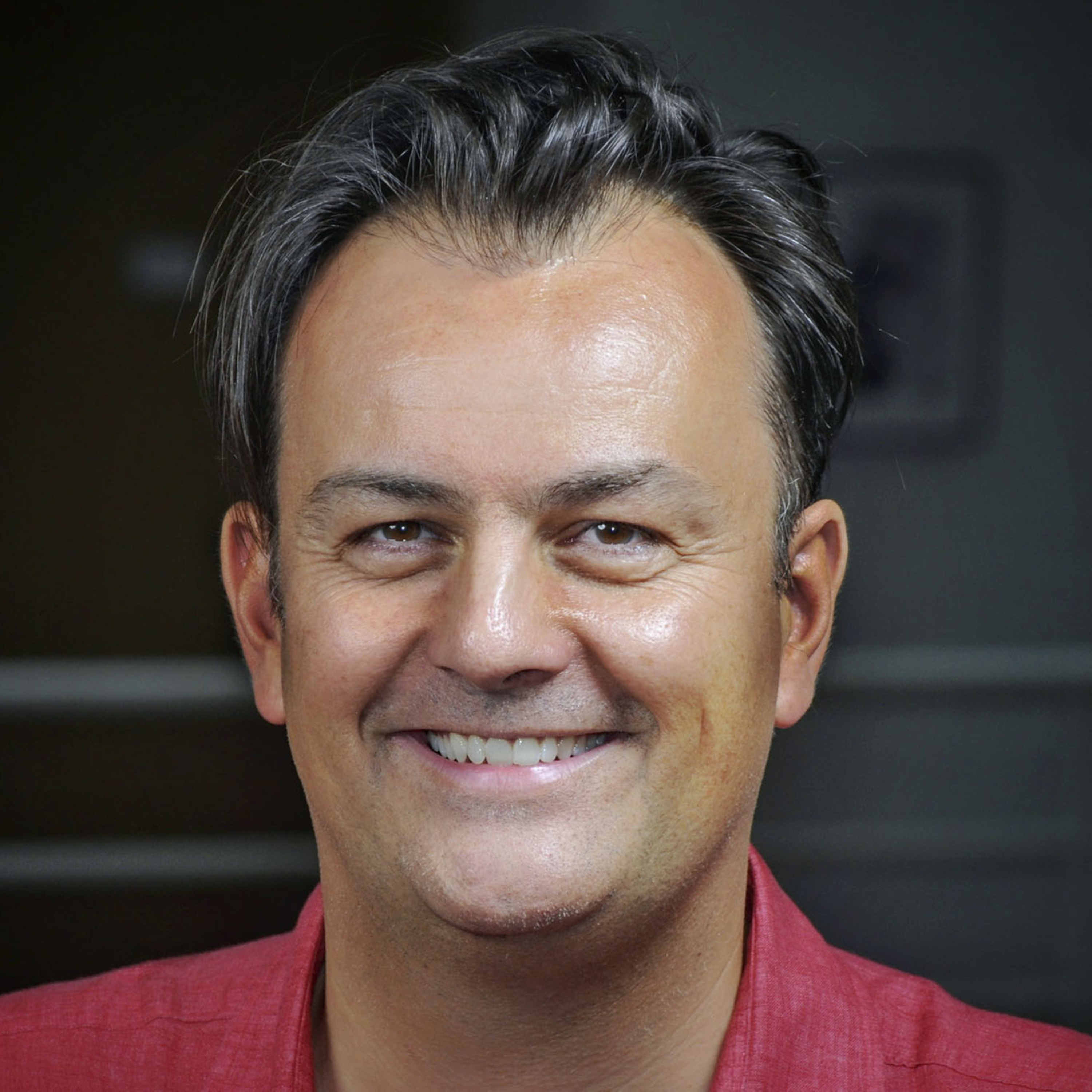
[Scholar Legacy Series- Ep. #79- Part 1/3] A Conversation with Dr. Laurent Dubois
Key points
- In the first of three conversations, Laurent Dubois talks about growing up in a French-speaking scientific family and learning about white privilege, segregation and the prestige attached to French.
- He describes his path from Princeton to graduate school at Michigan, where he joined the new doctoral program in history and anthropology and crossed paths with Michel-Rolph Trouillot.
- Dubois explains why his advisors steered his dissertation to Guadeloupe, which led to A Colony of Citizens and then Avengers of the New World.
- He argues that Haiti has been at the epicenter of global history since 1492, which is why it keeps returning to the news.
- Dubois discusses public expertise, campus political pressure, and the debates within the Haitian Studies Association over publishing and translating in Kreyòl.
- He notes that French publishers still show little interest in books on Haiti, and that the rights to the French edition of Avengers went to the Presses Universitaires d'Haïti.
Today, we're chatting with the brilliant Dr. Laurent Dubois about his early years, his journey into Haitian studies, and everything in between. Drink some kremas with ice while you’re listening!
Transcript
12,085 words · 53 min read
Machine transcript. Names and Kreyòl words may be misspelled. Tap a time to play from there. Also on Jou.
Laurent Dubois Rive sou mwen, menon, Rive sou mwen, menon, Racine Bazile, Jipep, Nan de membre m'dale, Ta janjou reglement, pou met nan bitash mwen, Negyo, son de rezon mwen, Bilolo, Nan de membre m'dale, I still think about all the discussions we had at HSA in October, you know?
Patrick Jean-Baptiste Yeah, yeah, those were fun.
Laurent Dubois Yeah.
Patrick Jean-Baptiste What are we going to talk about today? We're not going to discuss any of your books, not directly anyway. That's going to be later episodes where we'll dive deep into it. This is Laurent Dubois, the person, and his journey for this particular episode to get a sense of who you are as a man, as a person, as a scholar. And we'll start digging deeper into your bookshelves, maybe, in future episodes. I'd love to see some of the titles you have there. I'm sure that's not the one bookshelf that you have, right?
Laurent Dubois Oh, that's just one little portion. This is the one for the book I'm writing now. So it's like Louisiana, Canada.
Patrick Jean-Baptiste Maybe we can get into your book about soccer as well, just to kind of break the mold at some point. Part of the Legacy series, because you've written a lot and have done a lot within the Haitian studies space. And I can think of a better person to talk to. I'd like to do a 15-15-15. The first 15 years of your life, the middle 15, and the 15 up to the present.
Laurent Dubois Okay.
Patrick Jean-Baptiste I've got a little more than that.
Laurent Dubois It's somewhere in between. It's like 17-17-17. 17-17.
Patrick Jean-Baptiste Okay, same here. What was the first 17 years like? What sticks out? I'm looking for a common thread that runs through those three periods of your life.
Laurent Dubois Well, I think one big thing is that we, my family, I was born in Belgium. And my family moved when I was a baby, three weeks old. We moved to the United States on Halloween night, October 31st. Europeans didn't know what Halloween was. So my parents moved into a house near the National Institutes of Health, which is where they were coming for postdocs. And immediately upon arrival, people started knocking on our door in terrifying costumes and yelling things at my family. My parents were like, wow, this is a terrifying place. You know, what is going on? And had no candy to give to anyone. So they eventually had to call a friend who said, oh, it's Halloween. Turn off your lights and they'll stop coming. It's just kind of a funny story about culture clash. But in some ways, like many other migrant families, the kids became a little bit like translators for my parents. Me and my brother grew up as kids in the United States, speaking English out of the house and French in the house. And that bilingual, but also bicultural kind of space. This was Bethesda, Maryland in the 1970s. It's where the National Institutes of Health is. My dad worked at Walter Reed, my mom at National Institutes of Health. Originally, they were coming for just postdocs and they ended up staying. It was a very international place. This is the suburbs of Washington, D.C. A lot of the people in that milieu, the scientific milieu, were coming from abroad. So grew up very much bathed in kind of French language, francophone kind of conversations. Stayed pretty connected to Europe. We have a very large family in Belgium and we'd go visit. So that was part of upbringing a little bit between two places, something that a lot of Americans share. And that gave me the foundations for my later work. Since I learned French in the house, I learned French in my first language in a way. Later on, much later, when I was in college and became interested in Haiti and the Caribbean, that gave me an ability to read the literature and engage with the French language materials as well. I also would describe a little bit, this was the suburbs of Washington, D.C. When I was in high school, the metro line opened up into D.C. Washington was very much the place that shaped me as a younger person. The music scenes there, it was a vibrant punk music scene. There was a lot happening in Washington itself culturally. That probably shaped my interests in a lot of ways and my political outlook too. It was a town with a lot of interesting and important political conversations and groups as well.
Patrick Jean-Baptiste What were some of the formative experiences in that?
Laurent Dubois Well, part of it was, I mean, there are kind of two sides of it, interestingly, because I realized that on some level, as I became a historian later, and since I teach also about historical memory, how much like the European, particularly the experience of World War II, which was the experience that my grandparents had lived. And so there's an interesting way in which I realized like there was so much that was shaped by that perspective, right? That they had kind of grown up. Both my parents were actually born in March, 1939 in Belgium, a few months before the German invasion. They grew up during an occupation. And then in the post-war period, they were children of the 1960s, evolved in 1968. So it was interesting how much that kind of shaped, I think, like just in certain ways, that world. At the same time, in 1980s, Washington, D.C., the nation's capital, of course, on one hand, but also a city that was in the throes of issues around drugs and violence and policing, race and racial segregation. And so as a white American kind of immigrant background, but very much obviously in a kind of white space, kind of figuring out how to relate to that or understand that. There were interesting musics and punk scenes in D.C. that were identified as pretty political, identified as being involved with engaging with those kinds of questions. That was an apprenticeship. And also the place where I lived, which was quite suburban, actually, was international in the sense that Bethesda is also, you know, there's a French school. I didn't go to the French school. I went to a public school, but there's a French language school there. There's diplomats and so forth. So you had a kind of pretty cosmopolitan. But geographically, it's a very suburban place in terms of how it's built. All those sorts of things shaped who I was thinking. And certainly the culture of Washington and the histories of the civil rights movement, African-American histories, all those sorts of spaces present informing who I was.
Patrick Jean-Baptiste So what were your neighborhood or your social milieu at the time?
Laurent Dubois I grew up in some ways, the milieu in which we lived in was almost more foreign. My parents' world was essentially the scientific community, which was very international. In my high school, which was, we learned about these things. There was some presence of it. In some ways, it was in other ways that I came to better understand the larger history of the United States. And I do think that when I went to college, I did go to college pretty young. I started at Princeton when I was 16. I had skipped a grade early on. I was quickly drawn to the African-American studies program at Princeton. Partly it was an astounding group of people. Toni Morrison was there. Cornel West was there. Nell Painter. They were investing in building up African-American studies. So it was clearly one of the places on campus that was most interesting. But certainly it was also the case that the kind of questions I had grown up with and started to think about in terms of the... Some of it was just experiencing the racial segregation of this country, right? How Washington and its suburbs were. This was a time of increasing disparate wealth and differentiation. And then, you know, there's a lot of things about Washington, D.C. that are peculiar. Many different levels that I come to appreciate later. And when in college, in fact, I ended up studying some of the history of the civil rights movement. Took classes on civil rights. I wrote and researched something called Resurrection City, which was the 1968 culmination of the Poor People's Campaign that happened after Martin Luther King was assassinated. So that got me into research in archives at Howard. I returned to Washington informed by historical questions. I took a course with James Washington, a visiting professor on history of civil rights. Took classes with Cornel West. Took classes with Toni Morrison. I would say that was a way for me to get a better sense of things, you know, begun to understood in a very fragmented way as a teenager and now was given interpretive forms. I do think being exposed to those sorts of historical, cultural interpretations and realizing how much, how necessary those are to understand, like our situation was an early kind of positive, an early example that gave me a sense of why it's so important to understand that. Because I, partly for individual reasons, I came to understand things about my life that I wouldn't have had without that bigger context.
Patrick Jean-Baptiste What are some of the key things you end up understanding about your life from being exposed to these giants, these intellectual giants? Yeah. Anything in particular, any experiences, any classes that stuck out for you, that clicked or was it?
Laurent Dubois I think there's a few things. Some of it was just understanding the structures of white privilege and segregation that had shaped, even though we were like somewhat different in that we spoke a different language, but we are also in a space of privilege. We also spoke French, which is a language that has prestige around it. Coming to understand that I had a very particular kind of migrant experience that shaped who I was, but was also defined by the racial order of the United States and constraints or boundaries that I had been seeing, maybe sometimes trying to cross a little bit, but also very much there. And then the other part was, I think that I was trying to get a better understanding. And it's, there is a way in which I became, came to really understand the United States. I was interested in history and my parents talk about like, you know, we went to Williamsburg and I was sort of, I thought that was cool. And, you know, I had, I had a certainly, certainly an interest in, as a kid in kind of American history and those, in the basic things that we encountered. But then understanding from these classes later on, how fundamental, you know, kind of African-American history, the experience of slavery, African-American kind of culture struggles, all those sorts of things have been to structuring the U.S. And that was one of the major things I got from there. I mentioned that because I think that was a first stage that then became over time to understand on a larger scale, the place of the Caribbean, not just for the U.S., but globally, the foundations for it. I was really lucky because I went to Princeton University. I was mostly interested in the creative writing side. I had written creative stuff. I had gotten an award in high school for creative writing. That was what I was thinking of doing. But then it was there that the kind of, there was an astoundingly great group of people who kind of working between, and these were, I majored in, in college in like in five things. I majored in English and anthropology, like double major. But then I also did certificates in Latin American, African-American studies in creative writing. And I think I was just, you know, it's interesting because I only took one history class in all my time in college, which was an incredible Latin American history class for the guy named Michael Jimenez, who's now passed away. Unfortunately, that really was huge. But of course, all the classes I were taking in some ways were dealing with this broader question of dealing with history. Toni Morrison, I took both the literature class and writing class. She's such a giant in terms of thinking about the past and our relationship to it. To recognize, all of that was a massive, like gift to be able to be in that particular place at that time. And it's, I think everything I've tried to do since was in reaction or kind of trying to build on that.
Patrick Jean-Baptiste You mentioned earlier that the prestige of French. I could be wrong, but I don't hear that about almost any other language as being prestigious. Yeah. The French did a really good job of, because what is it, the phonetics? What is it? And how could we get Creole? In that, yeah. To the point where people would think of Creole as prestigious. Yeah. How did the French end up doing that?
Laurent Dubois It's a great question. And of course, it has a huge effect in Haiti. The prestige of French is very real. I do think that part of it is there's a longer institutional history of the way in which France, starting in this sort of 16th, 17th, 18th century, positioned itself as a kind of intellectual leader in the Western world or in the European world. Some of that was because it was, you know, some of it was just stuff that we could all learn from, which was like the government invested in education and research. They invested in institutions to promote their language. They invested in, these were the royal governments for their own reasons. But there was a pretty impressive development of literary and scholarly institutions in France that had an impact and were a draw for people from Scotland, England, Germany, and elsewhere. I mean, this was a place where people went to. Some of it's the result of a historical process. And the Enlightenment thinking of the 18th century was predominantly articulated in French. The founders of the United States were deeply informed by engaging with those texts in France and so forth. And then I think obviously in the cultural realm, there's also a way in which France has created a kind of state. It's one of the only countries, maybe the only one that has an academy, an official government academy that oversees the language, right? And to whom the greatest honor is to be named to that, right? To be a member of that. They created dictionaries early. And this all in the context in which France was a multilingual society in which Bret Occitan and lots of regional languages were spoken. Historians of World War I describe how there was a problem because soldiers didn't understand French. They spoke Breton. Working class or rural people might have had just a little bit of French education, but otherwise mostly lived in a totally other language. So in ways that is not dissimilar to what happens in Haiti, there's always been layers of language. But yeah, I do think that a lot of this does have to do with the era that I have studied, which is that revolutionary era in which the French intellectual political model simply became a kind of model. ever since the French Revolution, the French Revolution has been a reference point for every revolution since in one way or another, right? For decolonization, there's a way in which it set the stage in so many ways. And so I think that's remained the case for a long time. That has changed a lot, at least in the United States and globally recently. I don't know that French has the same prestige in the United States that had 20 or 30 years ago. But the result of all of that is, at least when I was growing up in the United States, it still remained the case that French language was seen as, you know, high culture and educated. And of course, the films and fashion, it helped, obviously, there were other aspects of France that code as upper class or aristocratic in a certain way. So it's interesting. But I think the bilingualism is one of the really interesting experiences I had in college. A TA from Mexico who was grading, who was an anthropology TA, and he was the first person to point out to me that I wrote, I was basically writing English words in French sentences. My sentences were always way too long. They had many different phrase sections. They would often do what French sentence strategy, where you have like, you have kind of two opposing things in the same sentence, you know, almost like a dialectical. And he basically said, well, I do the same thing because my first language is Spanish. But this is a beautiful French sentence with English words, but it doesn't work in English. So that was very helpful because the deep structures of my thinking were in some ways the French language. In recent years, as I've done more translation from French to English, I realized that I've really enjoyed doing that partly because I've been doing that my whole life in a certain way.
Patrick Jean-Baptiste So what's the middle 17 years look like for you?
Laurent Dubois Where are you? Yeah.
Patrick Jean-Baptiste In your life?
Laurent Dubois I graduated from Princeton in 1992. I had really gotten very into the academic. I had done a thesis in the anthropology department. At Princeton, you have to do senior theses, kind of longer work. I did two because I couldn't make it. So I just sort of did like a creative writing one, which was a novel engaging with the history of Washington. And then I also did something on Guadalupe. I ended up writing a senior thesis about Guadalupe and about medicine and healing in Guadalupe. This was partly because I had taken class with Barbara Browning, who is a professor at NYU now, but at the time was a young junior professor at Princeton, had just arrived. I studied at Yale with Robert Ferris Thompson, who's a kind of art historian, who's the person who coined the term Black Atlantic and was working on the aesthetic approach to the Black Atlantic. Barbara was a scholar of Brazil and dance in Brazil, but she taught a class on Caribbean literature in the English department that I took. And that was my first real encounter with Caribbean and Haitian materials. We read Maya Deren on Haitian Vaudu, we read Jacques Roumaet. And the class was in English, but I asked if I could read a lot of the text in French and started engaging. And around the same time I took a class from someone named Peter Johnson, who was a Latin America bibliographer at Princeton and was totally terrifying, like in a wonderful way, but very scary. He had a beret and a beard. We had to take his class to get a certificate in Latin American studies. It was a methods class. And I met like in the basement of the library in this little room and there were five of us. So there was no real escape. One of my former colleagues at Duke, Jocelyn Olcott, the great historian of Mexico, was in that class with me. We often say like, oh, everything we needed. We learned everything about being a historian in that class. But he'd had these assignments. And this was for an undergraduate class. This was pretty intense. I mean, he had an assignment where we had to go and sit in the library and look at the entire history of an academic journal and then step back and explain what the trends and changes in thought were in that field, you know, based on like what was being published. It was a great exercise, actually. But sort of getting us to understand that obviously scholarship is mutating, changing. Then we also had to do a paper based on primary sources. And because I was in the class with Barbara Browning reading notably about the U.S. occupation of Haiti, I ended up working on a paper on that. So really, because this was the first work I did that got me into doing Haitian studies, we read in Barbara Browning's class, a book called Mumbo Jumbo by Ishmael Reed. I'm not sure if you've ever encountered it or if your listeners have. Totally fascinating book. It's a book that was written in the early 70s. And it's a kind of critique, satire of many different things about American culture and race. But a big part of it is an engagement with the way that Haiti has been kind of present in American imaginary as a threat, as a danger. And in the book, there's a disease called just grew, which is essentially African culture and which the U.S. government and U.S. culture is trying to stamp out. But it's emanating and spreading from Haiti. And so it's book partly about the U.S. occupation in certain ways. It's about a lot of other things. So it's very much informed by what she was doing. But the AIDS epidemic was beginning or was already by the 80s was progressing. And as you and your listeners will surely remember, there was a very early on an accusation that Haitians were the ones who had brought AIDS to the United States in a wave of discrimination and attacks. Then this very big march that Haitians organized famously when the FDA said that they were not going to accept donations of Haitian blood. Really one of the biggest protests around the AIDS epidemic, march from Brooklyn into Manhattan. All of that happened while I was in college, right? So this is 1989, my sophomore year. I was reading about that, taking Caribbean classes, and a lot of these pieces just kind of converged or came together. The very first thing that I wrote was a junior paper, kind of combined a couple of these classes, but was really about understanding why it was so easy in the United States to say Haitians brought AIDS to the United States. And for Americans to just believe that and accept that. Even though I did know my mom was actually working on AIDS at the time, I knew that the theories were totally bunk. That there was no scientific basis for these theories. No one really knew at that time exactly what was going on. And it turned out that theory was false. So I knew it wasn't true, but I could see that everyone believed it anyway. That first question, what is it? And that's what brought me back to... So the Ishmael Reed novel helped me see the U.S. occupation as a fundamental moment when American attitudes about Haiti were shaped and created. That's the first kind of research I did trying to understand contemporary anti-Haitianism in historical perspective. It was really about the United States more than anything. It was about North American attitudes towards Haiti. Paul Farmer was actually writing articles at the time. And so a lot of this, if you think of that moment, I was working as a very young student. I should mention that Joan Dian, then goes by Colin Dian now, was a fellow at Princeton that year in the Davis Center, Historical Study Center. She wrote a book later called Haiti, History and the Gods, which she was working on at the time. And so she helped me with that paper. So I had this kind of amazing bunch of Caribbeanists there. Richard and Sally Price, who are Caribbean anthropologists and historians, also passed through. So it turns out in retrospect, I had these encounters with a lot of people. And then because I was working on that and interested in, at the time, and kind of medicine, partly, I think just my family background, I did a senior thesis that was about healing in Guadalupe that dealt with partly with Haitian migrants in Guadalupe, with the AIDS epidemic, with the relationship between kind of biomedical hospital care and other forms of medical care. And so anyway, that's really what those years were. Because of that, I decided to go to grad school straight away with a kind of interest in continuing that work. Okay. Yeah.
Patrick Jean-Baptiste So the blending of what's going on currently versus what you were, how has that changed now in terms of the students coming up? Do you think they have that same sort of context in which the way what passes for public discourse now versus how in the 80s, for example, how issues were, you know, pre-social media, the information stream was controlled by the three networks. Right. Yeah. So how is that, you know, kind of.
Laurent Dubois It's interesting. It's really different. I wasn't in New York at the time of those marches in 1989. And then I remember I used the New York Times as the source. I mean, that was essentially what, there wasn't social media either. So it wasn't like I could have done more. I could have done interviews. But at the time it was really different. It's interesting how it's hard to talk about this without sounding like a super old fogey. But the first thing I needed to do when I wanted to understand something was go to the library. When I got to Princeton, my dad had bought me a very early laptop. No one had, you know, people just thought it was this weird, you know, we use these printers with like the thing where you tore off. And most people didn't have email. I did get email just to write to my parents. It's not that long ago, but those sorts of things and internet searching or those sorts of things were barely nascent and certainly not normalized. The Princeton Firestone Library was my place of reference, including all the different newspapers, including other spaces. I think that was an important apprenticeship. Technology can be a wonderful thing and used in all kinds of great ways. But it was definitely a little bit different. Maybe because of that, I quickly, what I sort of, you know, was instructed in some ways was that to learn about the past, you know, we need to use, go to the sources, go to the books. To learn about the present, I would have to do my own research, which is what I did in Guadalupe. Like I went to Guadalupe and it's sort of a little bit of, you know, ethnographic work and interviewed people. It was a pretty unique environment in terms of the intellectual firepower. I was extremely lucky to be there. And also in a university where it wasn't like there was a bazillion students who were interested in doing Caribbean studies. The undergraduate population, this was not the main focus of the Princeton undergraduate population, to put it mildly. I was able to have a lot of time with extraordinary thinkers as an undergrad interested in this stuff. I think it's a little different now because the sense that you can have all this information so easily belies, belies the fact that at the end of the day, research is still research and has this process that requires discovery and sorts of things, right? So the interface, the interplay between what you're reading and what you're looking for and asking questions and then you're thinking and cycle is the secret to the thing, right? And having a sense that there's an infinite amount of information available at any time, I think does sometimes overshadow the reality of like, at the end of the day, you still have to move through these stages to get clarity about things. So yeah.
Patrick Jean-Baptiste My wife as a physician encounters this all the time. Patients have come in, well, I read this on WebMD. And then they start arguing with her 15 year experience and schooling. Is it too dramatic? I think there might even be a book with that title, The Death of Expertise. What do you think has happened? Because you have a lot of, quote unquote, public intellectuals out there because access is so easy and distribution is so easy. I don't see a lot of scholars in Haitian studies. I've gotten to know a lot of them now. They don't know how to approach this new medium. Even the millennials. Yeah. Because the way they were trained is they're still trained to do research. The world is moving. Information is moving. Most of it to me is crap. I mean, to be honest with it. What people are consuming are just crap. That's actually the whole basis for the Negma on Podcast, which was like, you don't have to listen to some pseudo intellectual. I have about 80 episodes here from scholars who are making 80 episodes of their lives, right? But three years later, I'm still the only one. So what's happening with expertise and the respect, not necessarily a reverence, because you studied under some of the greatest minds in the 20th century. Who are the equivalent Toni Morrison's and Cornel West today? You think the next generation of scholars are going to be fine because they're still going to hold back against this sort of microwave instant information and digestion without much contemplation. So what's going on today in your world and how many of your students that you're training next? How they're going? Is that even covered with the fact that here's how you approach information, here's how you share it, here's how you distribute it? Are the universities doing a good job of that?
Laurent Dubois Yeah, it's a great question and a big question for me personally. It has always been my whole career, like a really high priority to figure out how to get expertise in forms that are accessible to people. I don't think there's anything wrong with writing the academic work and being in those dialogues among academics, because that's how we progress knowledge. And it's important to have that space. And at the same time, we can find ways to translate. There's a lot of people that we've had on your podcast who do that very well and are continuing to do that. So I do think that has become an emphasis in academic training, although there's resistance to that, to train our students to be public scholars. And I have seen that work on some level so that it's true that it's very hard, obviously, to resist sort of anti-Haitianism and all the crap that's going, you know, like it's difficult to push back against that. But it is true that there are lots of scholars who, when something happens, as it did this past year or other years, they write the op-eds, they get out there, they're on radio shows. And there's a lot of them who, you know, a big group of people in Haitian Studies Association is really interested in that. And so there's a very big group of people who are working at doing that. You know, whether they get heard or whether they can have an effect on the bigger discourse is sort of a different question to some extent, because the obstacles are so big. But I do think it's also true that the kind of category, I mean, because I live in Charlottesville or Jamel Bowie, for instance. Jamel is a really great public intellectual and writes. There are certainly people, many others, just to mention him as somebody that I have had the privilege of hearing, speak, and reading a few times. I think there is that. I think that also it's always been the case that actually expertise has been in tension with political rhetoric. With, you know, there's a way in which the social sciences and humanities are about critiquing and analyzing structures of power. And so there's always a tension, the power holders in a certain way. There used to be sort of an alliance where journalism and scholarship were both powerful institutions. Although they work differently, they were about trying to seeking truth, telling stories, evidence-based stories. And obviously the changes in the media journalism space brought by social media have been very dramatic. University life has luck of having these institutional structures, these teaching structures, these universities that continue to maintain. On some level, there's a kind of cycle where the expertise of the faculty training students continues to be. Of course, it's under attack, under pressure, all sorts of things. But still, you know, I'm going to the American Historical Association or you went to Haitian Studies Association. And, you know, there's lots and lots of people. All those people are teaching. They're teaching in many different institutions. There's always such a focus on elite institutions, the Columbia's and Yale's and those sorts of places. But probably the most important work in many ways is happening at CUNY, LaGuardia Community College, and Miami-Dade, which are the biggest institutions. There's all this teaching going on under difficult circumstances and with all kinds of pressures. We shouldn't lose sight of the fact that on the ground, teaching and learning is happening at a huge scale. The light is being held. Yeah, and those people who have access to that are going to have different lives as a result. We confronted with the same stuff that we all are, but they'll have ways of what I described earlier. You know, you just begin to have some ways of interpreting and making your own decisions. And that's so essential because that's the basis of citizenship, participation in public life. It's definitely a battle. The current situation is concerning, but sometimes we imagine it's totally different from prior situations. In the 50s and 60s and 70s, the same attacks were made against universities. There's always been criticism of intellectuals as a danger from the Renaissance to the Enlightenment. Inevitable to some extent, because intellectuals critique the order that they're in, you know, and so there's always going to be people who don't like that.
Patrick Jean-Baptiste But you're not worried about the current attempt by someone. I mean, they have student plants in classes. And then some local professor, associate professors, lecturers, all of a sudden becomes a national
Laurent Dubois I do worry about that because it affects the teaching space and it distorts it. The reality is that they did a big survey at UVA and in different places and students overwhelmingly, like in the 90 percentile report, that their different perspectives are respected and heard. They don't feel like faculty are pushing a particular thing on that. You know, there's a real distortion of what's happening. The vast majority of faculty are professional teachers who, when they go in the classroom, they're there to teach. They work. That's their work. They may have their opinions outside of the classroom and their work in the classroom are not the same thing, just like any other person who may be a businessman and also have a political opinion. So I think it is worrisome and it's unfortunate, too, because it's sort of, to my mind, the universities in the United States have been driving and pushing and moving forward developments in technology and science and the humanity. These are one of the most important engines, positive things in this country. It seems sort of crazy to attack them, even from the perspective of the economic benefits they have engendered for this country. I think they're so fundamental to the way the United States innovations have happened. We'll have to see how far these things go, how much effect they have. On a daily life on campus, these things do shape things a little bit, but the vast majority of things that are happening is that, you know, 10,000 classes are going on and people are having very good, it's a distortion to imagine that this is sort of like the main thing, you know, which is not to, which is not to, to minimize, you know, the importance of these conversations and the importance of the, of the debates about activism and free speech and all those sorts of things are very real. So it's not, but it's also like, there's a lot happening every day that is not newsworthy, but it's very important. It's just the work of education. The reality is that students and faculty alike are largely looking for the same thing, positive education for people to move and grow intellectually overwhelmingly. Research expertise in a particular field and expertise in teaching are vocations that people spend their lives developing and working on. Sometimes we fail and have to improve. I think it would be important for people to respect anybody else's work, whether it's the person who builds the house or the person who builds technology or whatever. Respect this kind of work as work.
Patrick Jean-Baptiste What's the last 17 years of the present been like? So I quickly, I did skip over grad school, but I went to graduate school. I got a PhD.
Laurent Dubois And that's sort of... What was your dissertation on? My dissertation was on Guadeloupe. I did a senior thesis on Guadeloupe and kept working on Guadeloupe. At some point, I thought about writing my dissertation about the Haitian revolution and my advisors, I think to their credit said, it's such a huge and complex story. And maybe for a dissertation, a slightly smaller island will be a good idea. And anyway, different kinds of sources. But so my dissertation, which is my first book called A Colony of Citizens, was about the revolution in Guadeloupe in particular. So it traces about France and Haiti and abolitionism, but it goes from 1787 to 1804. It talks about slave revolt in Guadeloupe in 1793 and the abolition of slavery and how it affected Guadeloupe and then the reestablishment of slavery in 1802. So it's a history that very much parallels and was interrelated with the Haitian story. I found incredible materials in France. I worked in Guadeloupe as well, but the bulk of the materials are in the French National Archives, notarial records, correspondence, that sorts of things. So it's kind of a social, cultural, political history of what happened in Guadeloupe during those years. It's interesting because when I started writing it, there was some historiography about it, but the most important works about it were novels. Alejo Carpentier has a novel called El Siglo de Sluces in Spanish. It's translated as Explosion in the Cathedral. Much longer than his novel about the Haitian Revolution, which is more well known, but is about that period. And then a novelist named Daniel Maxima, an extraordinary Guadeloupe novelist, had written a novel about the period too, and I got to know him. So that book is also very much about kind of memory, literature, and history and how they intertwine.
Patrick Jean-Baptiste Yeah. Why is the Haitian Revolution such a big, big spectacle? Yeah. What is it about it compared to the history of say Cuba? What is it about Haiti specifically? I had a friend of mine say to me who had nothing about it. He's just like, why is Haiti always in the news? It's this tiny little country, right? Why is it Jamaica? Why is it... Yeah, yeah.
Laurent Dubois Why Haiti? I mean, it's been at the epicenter of global history really since 1492. We can say that maybe before too, in some ways, you know, but certainly since 1492, when, you know, it's the first place that Europeans go in the Americas. Since then, it's always been at the epicenter for better or worse place where things have been developed, where things have been created, where things have been enforced with various forms of particularly brutal plantation slavery were tried out. Then the revolution upends that, but then new forms of control. It's not totally unique. Everything that's happened in Haiti has laws and analogs to other places. And I would say Cuba has been equally generative, certainly in the 20th century, the Cuban revolution and so forth. It is interesting compared to its relative size. It's probably the country upon which more has been projected than any other country in the world. If you say Haiti, someone will have something in their mind that comes up. A lot of it will be not good. Like, often very negative, stereotyped, all sorts of things, right? It's rare to find someone who, if I say Bolivia, a lot of people will be like, I don't know, maybe it's in the Andes. Some people will know more. If I said Switzerland, people would be like the banks or whatever. Right. Say Haiti though. And it's like, for the revolution, it's also just that it was such a nexus of, it's just a question. It's a problem. It's, it's two things. One is that as you know, as Marlena Dalt, who's you've had on your podcast, I recommended that episode for people. He's written about in Awakening the Ashes and others have written about in interesting ways. Like the, the, there's such a long history of writing about the Haitian revolution, both within Haiti, but then also externally. There's layers and layers of people wanting the Haitian revolution to symbolize one thing or another. You know, some people, for some people symbolizing very positive things, right? Like the kind of moment of liberation, but for many, many others, using it as a kind of allegory to explain why early on justifying continuing slavery, later on justifying various racial ideologies, people will need the Haitian revolution to be something. If you begin reading about the Haitian revolution, you will find incredible amounts of ideologically sort of potent, powerful uses of the Haitian revolution for various ends. This is something that Michel Rolf Trieu analyzed brilliantly and others have as well. First, there's that. The thing itself, even if you go into the archives or get into the material, it's so complicated. It's multiple empires. It's a colony with different regions that are each different. Like Jeremy is not Le Cap, which is not Paul Pince, which is not the central plateau. And then because of the nature of this revolution, like most other revolutions, the main actors of the revolution created a fair amount of the texts that you use about the revolution. So in other words, if you're looking at the American revolution, a lot of the people who you would describe as core people driving and writing stuff down at the time, you know, in France, that's also the case. There's obviously other people who are not writing things down, but in the Haitian case, like the core, you know, like the core launchers of the, like someone like Boukman didn't write anything is only represented by others, you know, Toussaint Louverture and Dessalines different. They did write things, right? There are a few, but there's a huge number of actors in the revolution who are the main people whose mentality we would need to understand to understand what happened, who are only represented by other people, many whom are extremely hostile to them and everything about their project. What I found when I worked on Guadeloupe was that among other things, I could find continuous runs of notarial registers throughout the whole years, which allowed me to follow people. You can do some of that for Haiti, but not quite to the same extent, partly the artifact, the fact that Guadeloupe has remained part of France. And so there's different kind of archival, a lot of this has to do with archival silences and the things that Michel Roverture has written about.
Patrick Jean-Baptiste You mentioned that HSA, I wish I had recorded that, by the way. You talked about your, Michel Roverture, did you study under him or?
Laurent Dubois I didn't study under him, but in 1996, the University of Michigan, where I went for graduate school, had a program in history and anthropology, which had just begun. I was in the first full class of students who started in, and it was a project of anthropology and history departments, but it was an interdisciplinary PhD. So you had to do both and you had to write it to both. It was a pretty incredible group of people. Rebecca Scott was there at the time. She's a very important historian of Cuba. Ada Ferrer, who people are familiar with, incredible historian of Cuba, was a student ahead of me, not in the anthropology history program, but in history. So many other sort of people working in that area. My advisor, Fernando Coronil, who was a Venezuelan anthropologist, passed away now, was deeply engaged with the Caribbean in his work as well. There was, at the University of Michigan, just this culture of like little seminars with invited guests, and they were very generous about bringing graduate students into them. In 1996, I'm pretty sure it was. Trio came and gave version of a chapter from Silencing the Past, the chapter on Sans Souci, which is kind of the heart of that book. I met him there, talked to him at length. We had a whole seminar, and he was thinking through that chapter at the time. This is right when I was starting to think about what my dissertation was going to be about. It was really extraordinary to have that experience. On a few other occasions, I chose between a few places, but I thought about going to study at Hopkins with Michelle Rolf Trio and Sidney Mintz, who were there at the time. Trio then left soon afterwards for Chicago. I had met him as an undergrad student visiting potential graduate programs, and then saw him a few other times. Saw him once kind of randomly in Paris once, and we had a conversation. I didn't know him super well, but I knew him a little bit, and mostly kind of his work came at a time when... And I think because I had that experience too of seeing... There's something different about seeing like a book published, and you think like, okay, this is the book, and I'm going to engage with it, versus seeing someone who was in the middle of working on something, and people debating, and that kind of stuff. So there was a kind of different energy you get from that, in the sense of being invited into saying like, okay, he's going to frame this in a certain way, but is there some other ways we can contribute this? And so I think that... And it was encouraging too, because it was... You know, at the time, I remember realizing or thinking about the fact that within the United States, the number of graduate students writing about the Haitian Revolution at the time, specifically, there were people working on Haiti more broadly, and there were people in France that I met. I mean, I'm not saying there was no one, but it wasn't like, oh, here's the 15 other students that are working in different places. So having that encouragement, and you know, when people... It's sort of sometimes easy to forget this, but until... Even until 2004, when there was a series of big conferences on the Haitian Revolution, it was not really a field that people described. It was David Gagas, who had been writing for a long time on, you know, really important work on the Haitian Revolution. There were people out there, for sure, but most universities didn't even have a position in Caribbean history as part of a history department, right? That was still to come. You know, literature departments didn't necessarily have Caribbean literature and so forth. It was definitely the sense that one had to find one's way in between. And then someone like Trieu, who was so brilliantly able to reshape not just the field of Haitian and Caribbean studies, but anthropology, history, thinking his works are totally influential, I think, was because he was moving between these different areas. And he was drawing on this Haitian intellectual tradition that he acknowledges, you know, deeply in the book that he was bringing into that conversation too. So that's different. I know he also, obviously some of his former students have put out the Trio Reader with Duke Press, wonderful work. So there's a lot of other people that he influenced, but for me, that was very essential.
Patrick Jean-Baptiste I'm worried about post or pre-revolutionary Haitian studies. Do you think it's on the right trajectory today? After your generation of scholars retire, are the next generation focusing on that particular period of revolutionary Haiti? Every time I ask this question, names aren't just rattled off, or just coming up to carry the mantle of the John Garaguses and you who sort of laid the foundation.
Laurent Dubois Yeah.
Patrick Jean-Baptiste Because there's still more we need to know about the Haitian revolution pre and post, right?
Laurent Dubois Mm-hmm.
Patrick Jean-Baptiste There are a lot of gaps that still remain. Are you encouraged, you know, that there are interests out there, the upcoming scholars interested in that period?
Laurent Dubois Yeah, I think so. Jesus Ruiz, who is a scholar, is a book coming out soon on the Spanish. Who is that? Jesus Ruiz is his name, who is, I mean, I think, well, I can find that. I'm forgetting the last title of the book, but it's a book on, it's a book using a lot of Spanish sources on royalism, Spain, and the Haitian revolution. It's about the insert Spanish side of the story. But I also think that two things have happened. One is that in a useful way, there was a sense that there was all this work on the Haitian revolution, but other periods where I will note that the Frederick Douglass prize, which is our most prestigious prize in kind of slavery and abolition studies is this year is going to two books on Sandeman, you know, basically. So Marlin and Daud and Sarah Johnson, Sarah Johnson wrote a book about Moreau de Saint-Marie and Marlin and Daud wrote Awakening the Ashes. So that's a good signal that the recognition, those are both a little bit, you know, more senior scholars. I think there are junior people working on it in a good way. People recognize that the Haitian revolution is important, but it's not the only part of Haitian history that needs attention, right? So you have more people working on the U.S. occupation. We just hired someone at UVA, Shelby Sinclair, who's working on the U.S. occupation era. That needs a lot of work. There's really great work coming out in that 19th century, which is a field that people have not looked at enough. John Henry Gonzalez's book, Home of the Rune Nation, looks at more of that early 19th century. Of course, Marlin and Daud's biography of Christophe will do that too. So I think you have a sense of just a multiplication. There's important work on the 17th and 18th centuries too. There was a moment I remember sort of people saying like, oh, like the Haitian revolution is like, oh, there's all these books about it now. You know, people don't need to work on it, which is totally wrong. I think all the books that have been written need to be revised, critiqued. People need to dive into questions, ask questions, change the interpretation of certain things. I would welcome that and think that's important. There are things in Avengers that I need to be revisited, overturned, et cetera, because that's the nature of research. And that's happened. You know, there's big debates now about kind of Africans in the Haitian revolution, which is an interesting field and really needs more work. How do we think about the Congos in the revolution? A very difficult question methodologically. I would say not a bazillion people, but there's enough to sustain it. A scholarly field like that, it requires some kind of core group of people who are doing interesting work and dialogue with each other. And also a larger set of fields that engage with that. And if we have that, then I think we'll be fine. The literature that exists as a foundation and continues to be useful and help all the work that's been done, editing documents and putting out that kind of work is also important. I also think there's a huge importance, obviously to kind of center Haitian scholars, Haitian voices, Haitian American scholars, you know, approaching lots of different questions in different ways. The revolution is just one piece of that larger story. So I think that's important too. I took seriously and I thought it was right. People would make critiques like, oh, it's great to talk about the Haitian revolution, but what about the early 19th century? And what about these other places? We need to know more about that to understand Haitian history as well. And that's all very true.
Patrick Jean-Baptiste What is your thoughts on Anglophone Haitian studies supporting the works of Haitian scholars in Haiti? Haitian studies is trying to go to their website and you see most of their stuff translated into three languages, English, Creole and French. So what is your thoughts on that? Because I mean, you took, you did, you know, Monumento, one of my favorite books of all time, the Haitians, bringing up great scholars like Jean Casimir's work to the Anglophone world. Are there others that you think, is there a trend in that direction or is the Haitians one of the rare instances where a historian of of your, of your stature and Jean Casimir's stature, you're able to bring his work to the Anglophone world. What about the Haitians scholars in Haiti and their work in terms of resource allocation and bringing their works to a wider audience outside of Haiti? Yeah, I think it's a super important thing.
Laurent Dubois It's something that I think we often, you know, lots of debate and conflict around that question that are vital to have a lot of debates around in the Haitian studies association around that, including around the languages of publication, right? So why don't more people write in Creole? Why don't more people translate their books into Creole? Is that the best way? Or do we create kind of like Jean Casimir, in addition to the Haitians, has done a series of YouTube videos with Michel Degraff in Creole, because he thinks that's actually the way to communicate with certain audiences. There's certainly a lot of work going on with translation in scholarship, as well as literature. My colleague, Kayama Glover, you've also had on your show, has done incredible work translating Haitian novels. I think Chauvet and Franquetian and De Pastres, we just collaborated on a translation of Jean-Claude Fignolet's book, Aube Tranquille, which will come out this spring. And so I think, so that's important to have, you know, there's a certain kind of literary tradition that was not accessible to the Anglophone readership, including people in the diaspora who might not read French and who will have access to that. We collectively with Nadev Menard, who teaches in Haiti, Millery Poligny is in New York, and Chantal Varna did The Haiti Reader. The point was to have a series of, a big series of Haitian intellectuals and have at least some of their work be available to, to readers. I think that translation work is important and it's one straightforward way to increase the communication. And I think with The Haitians has done really well. People have really responded to it. The French version is actually difficult to come by. It was a small print run in Haiti. The English version, it would be great for people to have more access to the original version, but that English version has become one way for it to travel. People respond to it because not just Haitian studies, but anybody who thinks about slavery and those questions, it's a very important book. So I was honored that he entrusted me with that translation and that we were able to get that out. But I also think that there's no getting around these structural, economic, institutional inequalities, right? So the Haitian university system, there's incredible people doing incredible work in those systems, but they're obviously under tremendous duress. The economics of it is difficult. It's difficult for Haitian scholars to travel. The visas are difficult to come by. There's all kinds of inequalities that affect Haitian scholars. And in the United States, we have much better funded, larger institutions where it's much easier for people. There's obviously lots of inequalities within the American Academy as well. Nevertheless, there's access to archives. People can travel to Europe and do research. There's all kinds of things that structure that relationship. It's also true that the questions of language and inequality in Haiti between Creole and French and the language of education and who has access is its own question. So I guess I do think that for the most part, I think people want to do, you know, so the fact of having Creole be so central to Haitian studies meetings is a victory. You know, that's something people have fought hard for and it means a lot to sort of say like, yes, this is a language of intellectual debate and discussion and scholarship. You know, I also think that the French language stuff is important because the tradition of Haitian thought from the 18th century on is most, a huge amount of it is in French. Firmaz and the Jean, all those kind of thinkers, right? Ardouin, Madieu, those are these massive tomes written in French, probably going to ever be done of Madieu or Ardouin. You know, it's just sort of a too, too great of a thing. There's work, it's great to see Jean Vier and Firmin and more of those works are getting translated and that's really important. I would encourage presses and scholars to do that work of translation in the other direction, how to get material in circulation in Haiti, in particular Creole language. It's worth thinking about using audio visual and those sorts of, you know, what are the different modes of communication? I think the books, books and Creole are great and should, should, should happen. And at the same time, there's maybe other routes as well. So I think between these different sectors, it's, it's a complicated layers. You've got the diaspora Haitians working in institutions in Haiti who have a different set of questions. And then you have North American scholars who are not of Haitian background engaged as well. At best, all of those communities can play the role that they can play.
Patrick Jean-Baptiste How has AI moving to the present as a translator? Has it been more, because I've talked to other scholars who are translators and they admit to using Google translate or AI to sort of more efficiently, but they still have to use their command of the other language to do this. Are you, are you looking at that space, the intrusion for lack of a better term of AI into the, is it doing a good job or have you tested it out to see how good of a job it does or is there a future and is it just another tool in the, in the tool? Yeah. It's interesting. I feel like a bit of a traditional,
Laurent Dubois traditionalist because I just haven't used it and I haven't considered using it. I would use it for trying to translate a quick phrase or something. It's partly because I'm trained like Jean-Claude Fignolet, I think would break like AI, you know, like it's like, it's sort of, it's such a completely strange, like, so some of these works, you know, I think are. And the other thing is that the work of translation with both intellectual work and it's not just a mathematical thing between languages. It's like achieving to some extent the, the valence and soul of the work in the new language. Translating a novel into another language is also just a literary act, right? You're trying to produce something that is up to the standards of the original work and it's literariness, you know, and that is often, it's staying close to the text, but there's also a lot of decisions you have to make how to make that work, right? In English, these technologies will be fine for literal translation, but literal translation is only the very beginning of translation. That's the first time, the first stage of the translation. I guess some people might use these technologies for the first stage of the translation. I would still worry about that because I'm always learning something about the original when I'm translating. It's, if I read it before, I read it in a certain way, but when I read it as a translator, I see different things. I wouldn't want to have a translation done and then start from the English without having had that moment of deep puzzling over, like, what does this really mean? When I'm translating Jean Casimir, there's, you know, there's a lot of times where I was like, I really had to think, did he really mean, you know, and I had the luck of then going to him and being like, is this what you really meant in English? Because it's complicated. I guess a lot of these tools, I mean, maybe I'll sound like a romanticist, but I think that the human, human intelligence and imagination remains like a different thing. I don't, I'm not against using whatever tools we might use, but I think we always have to ask if there's something getting lost in the process of using a tool to replace something that at the end of the day is something that we need to, we need to move through ourselves in order to reach the, and, and I think contextualization, you know, the other thing is that like, to me, it's helpful having spent a long time thinking about the topic itself and then being able to get a sense of there's stuff on the page and then there's everything around it. That's going to make sense of the sentence. Right. So I think for me, at least with Jean, it was helpful to have had a long dialogue with him to have taught with him and to understand the sources he was drawing on. When I was translating into English, I knew what was at stake in what he was trying to say, you know? So I think, you know, I think we'll still need, yeah, I think we'll still need human translators. I guess that's the lesson. I think for a little while.
Patrick Jean-Baptiste Right. So anything else on the last 17 years up to the present?
Laurent Dubois I think it's been incredibly cool to see the field thriving. The field is exciting. You meet undergrad students who are getting into the field, graduate students doing tremendous work. You know, it's, it's a really, I think it's just a, such a robust, you know, you sometimes meet people who are like, oh, Haitian studies. That must be a small thing. I'm like, that's not a small thing at all. It's actually really thriving. That's changed over time. And you see a lot of voices. I remember at certain moments when there's been something in the news, maybe 20 years ago, when I was beginning my career, I often felt like some responsibility to try to write an op-ed just to say, pay attention to the history of Haiti or the U S occupation. Now, when something happens, you wake up the next day and you see 10 great articles in different venues. People were writing blogs and social media. And, you know, if people were wanting to look for expertise, they can come to your show and other places. It's, it's there, you know, want that. Some people don't really want it, but at least I do think that on the side of the supply, there's always more that can be done. But I think people are really trying to do a lot. And if you think about the bookstore that's available around Haiti now, it's amazing. We got to support more voices, more takes on things. There should be many different versions around the same history, but we really have a lot happening. So that's great. And that means that people can teach it. The other thing I think that's changed is that when I was in graduate school, the average French history class or U S history class would have either zero mention of Haiti or very brief passing mention of Haiti. You know, that's not true of everyone, but that was generally the case, you know, and that has changed now too. People doing European history or U S history generally feel like it's incumbent on them. At least many people feel like they've got to include the Haitian story. And if they want to include the Haitian story without being specialists, they've got material to teach. You know, there's not really an excuse anymore. You can't say like, oh, I mean, I used to hear that early on, you know, if you're like, well, what am I supposed to teach? There's not really a lot of material or something that wasn't even that true back then, but now it's completely untrue. You just have to say, okay, I'll send you a list of 25 books and educate yourself. So many of the students that I have like graduate students, I think of Julia Gaffield or Isabel Bradley, a former student who's at NYU now working. These are all students who in high school or in college got exposed in a class or in some other way to writings on Haitian history. And at a young age, they thought, huh, that's really interesting. And then these are the people who become the next generation of scholars. But I think it's important for people to, if, if it's only when you're doing a PhD that you suddenly encounter the Haitian revolution, you're not going to change your whole topic to work on it. You need to actually encounter it earlier in your education so that you can think about this as a viable thing to study. And so I think that's important. So the more we can do, I think I share with you the comic book we've done on Haiti for New York schools. If high schoolers are exposed to that, then most of them will be like, oh, that's interesting. And then move on. But there's going to be a few who say, I want to keep thinking about that and go deeper and deeper.
Patrick Jean-Baptiste And that's how we sustain the field stuff. Jeremy Popkin told me that he had a hard time finding publishers in France to publish his books on Haiti. Is that still the case?
Laurent Dubois I think that's still the case. My book Avengers was translated into French by a small publisher with a great translator, Thomas van Humbeck, who did it out of devotion to like this. They did then put it back out in paperback recently. They were really cool. They actually gave the rights to the Presse Universitaire d'Aiti in Haiti to let them do a version. So, but it was like kind of relationships that did it. I mean, it wasn't like a big publishing house was like, hey, we want to translate. Avengers recently came out in Dutch, which is interesting as a Portuguese version. But yeah, it's not super easy in France. I would say in general, France is one place where there needs to be a lot more knowledge about Haiti. I mean, it's still an issue in France. And some of that has to do with the centralized nature of history teaching. On the one hand could make it much easier to change. Like if they just decided that every high school in France spent a month working on something like Haiti, they could do it. You know, they haven't done it. The room that a high school teacher or even a university teacher has to say, oh, I'm going to do a whole thing on Haiti is less than the United States, right? There's interest, but I think it's very complicated relationship as well as with Guadeloupe and Martinique. And so certainly, yeah, that's another place where more recognition, acknowledgement of that history is vital. And in that sense, I remember even John Casimir saying this, he's like in Haiti, the French cultural services are present. They have an important presence in the cultural landscape in terms of like the scholarly community in France that works on Haiti is so much smaller than the United States. You know, like the US is really the place where in terms of pure numbers, the number of people is significant. You know, you know, it'd be great if it was otherwise, it'd be great if there was as much happening on both sides. But the nature of the French academy and society is such that in ways the United States has actually been strangely, both countries obviously have a lot to answer for in their relationship to Haiti, that there's been more space for people, or people have been able to create space through their struggles for things in a way that is much more difficult in France. Thank you.
Patrick Jean-Baptiste Well, this is part two. What do you want to tackle your first book or?
Laurent Dubois You decide which one you think is worth it. I'd be happy to either return to like Avengers. I mean, there's Avengers of the New World and A Colony of Citizens are the two books I wrote at the beginning that are intertwined. That might be interesting. Or if you wanted to talk about Aftershocks or that book, either way.
Patrick Jean-Baptiste When I did the interview with Nadev about the Haiti reader, a lot of questions asked, she's like, talk to Laura, talk to Laura. I was like, so maybe we could go.
Laurent Dubois Yeah. I mean, that was a project because I was on the board at Duke University Press. So they had asked me to, they asked me to kind of shepherd it. I was the one who then said, yeah, happy to answer questions. I mean, that's one of those projects where it's sort of like a potential never, because people are always like, why did you not include this? Why did you not include that? It's already like 700 pages long. We did what we could, but the idea was that I like to say to people, I hope it's the first Haiti reader, but you can make your own Haiti reader. It's not meant to be the last Haiti reader. It's just a beginning. And you can certainly question why this, why not that. Only because of our own decision. You know, there were other things that we had to get rights for every single thing in there. And you can imagine what that entailed working across the legal questions multiple times. A lot of the work was honestly stuff like that. So that would be a fun one to talk about. Bring on other editors. And then I'd love to talk about the book when that comes out. I think that's, that is a really, really interesting novel. And I think it'd be great for to make that sort of put that in front of the diaspora readers. Cause there's a lot there about trauma, history, memory, and stuff that I think people could really engage with.
Patrick Jean-Baptiste Perfect. I'll contact you and then we'll set those interviews up. Thank you, professor.
Laurent Dubois All right. Thank you for inviting me. It's such an honor to be on your show and be part of this tradition, growing tradition. Bye. You too. Bye.
