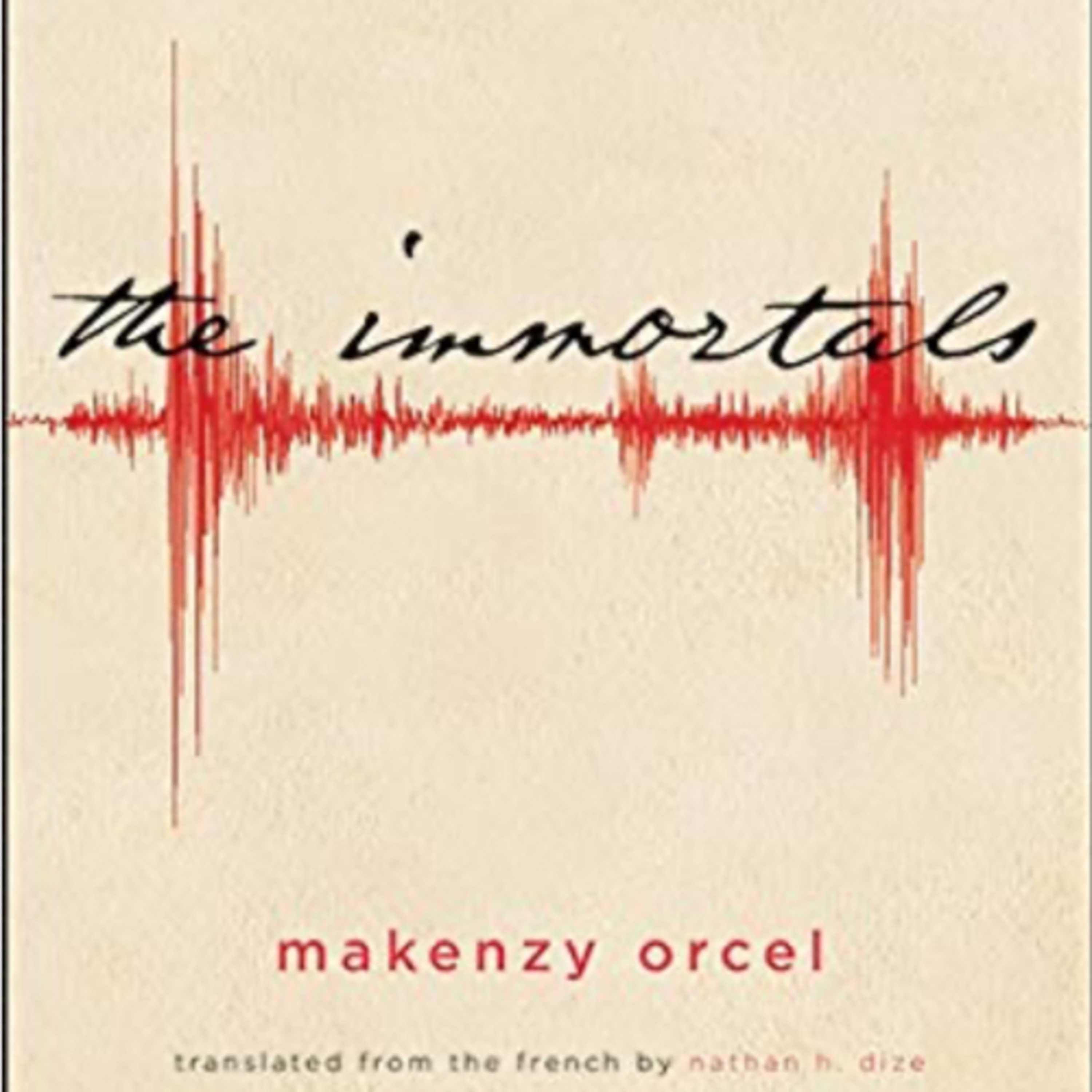
The Immortals
Key points
- Nathan Dize describes how he came to translate Makenzy Orcel's novel The Immortals, beginning in 2018 alongside his dissertation on spectacles of death in Haitian literature and history.
- He argues that the novel does not ask readers to redeem themselves by consuming the spectacle of the 2010 earthquake.
- Dize cites the poet and translator John Keene's view that translating Black literature is always a political act.
- He discusses trust with the author, the footnotes he added to limit lost meaning, and his choice to keep the Kreyòl word bouzen with a definition.
- Dize explains how the novel's many pauses and white space shape its poetics, and how he tracked its unnamed narrators.
- He sums up the story: the narrator recounts the life of a young woman called Shakira, who dies when her building collapses in the earthquake.
The Immortals is set in an infamous neighborhood of Port-au-Prince, on Grand-Rue, where many women, young and old, trade in flesh, sex, and desire. We learn, in glimpses and fragments, about the lives of women who fall in love with the moving images of television, the romance of a novel, and the dreams of escape. This moving novel asks, What becomes of these women, their lives, their stories, their desires, and their whims when a violent earthquake brings the capital city and its brothels to their knees?To preserve the memory of women she lived and worked with, the anonymous narrator makes a deal with her client once she discovers that he is a writer: sex in exchange for recording the stories of the friends who were buried beneath the rubble. She tells the stories of women who were friends, lovers, daughters, and mothers—all while their profession sought to hide any trace of intimacy or interiority through pseudonyms and artifice. Ultimately the book reveals how a group of women sought to make a name for themselves in life, demanding that they not be forgotten in death.Winner of France's 2012 Prix Thyde Monnier de la Société des Gens de Lettres, The Immortals is the first work of fiction by the celebrated Haitian writer Makenzy Orcel. Mingling poetry and prose, Orcel centers stories that too often go untold, while reflecting on the power and limits of storytelling in the face of catastrophe.
Transcript
5,549 words · 24 min read
Machine transcript. Names and Kreyòl words may be misspelled. Tap a time to play from there. Also on Jou.
Patrick Jean-Baptiste LUchinomination I remember. Okay. Can we have a good time? It's good. So how did you end up being the translator for Mackenzie's The Immortals? Mackenzie Orsel's The Immortals?
Nathan Dize Well, you know, I think a lot of the whole process kind of catches people off guard when I say that I just started translating. But there's no one, unless one is already an established translator working for a press, rarely is one tabbed for a translation or chosen. So once I found out that the rights were still available in North America through the publisher, then I started in earnest really translating. I started the project out as a way of sort of distracting myself from a lot of what was going on around me in graduate school and in my own sort of research into Haitian literature. And I wanted something that was a little bit more immediate than theorizing. I wanted to actually like read the literature again instead of being in this sort of highfalutin space that sometimes academics wade too far into. So I sort of lost touch with reality and translating Mackenzie Orsel's, at least the first part of Mackenzie Orsel's novel, The Immortals, was a way for me to sort of come back.
Patrick Jean-Baptiste So what year are we talking here?
Nathan Dize Yeah, this is in the fall of 2018. I started translating right after I turned in my dissertation prospectus. And I know we've talked about the dissertation and sort of my research ideas a little bit in the past. And so they're very much linked. And I wanted to return to a novel that I hadn't read in a long time. And so I just started, I started reading it. And then I realized, well, what about reading this another way? And so I started translating it sort of page by page. I would do a page a night. And, you know, after 30 days of reading it slowly, translating it slowly, I felt like I wanted to complete the book.
Patrick Jean-Baptiste So can you go into a little bit about the tie-in, the sort of the through lines between your dissertation, concentration, and where you ended up doing the actual translation of Mackenzie Orsel's The Immortals? What's the through line?
Nathan Dize Yeah. So the through line is I started writing this dissertation about spectacles of death in Haitian literature and history, which at the beginning started out as more of a project trying to understand why authors and historians, people in general, Haitians would write and take to the page to depict seemingly horrific actions, catastrophic events. What's the purpose? What's the point of that exercise? So I had scenes of execution, summary execution, as part of my dissertation proposal, people being put before firing squads, occupation, massacres, and things like that. And it was all very, and the earthquake was sort of, the earthquake in 2010, January 12, 2010, was sort of going to be the final moment of the dissertation and sort of why and how Haitian writers have taken to the page to depict that event. And that, that moment of, of massive loss of life and tragedy. And at a certain point, I started to feel as though the dissertation was, was just sort of like gazing into the spectacle to no avail. Um, there, there was no point other than the death. And so that's when, after I turned in my dissertation prospectus and, and, uh, was waiting for the committee to, to, um, decide my fate, so to speak. Um, I really sort of started to shift gears as I was reading, um, the immortals and I started to, to shape a new dissertation. That was, that was more about, um, why remembering is matters so much. Why remembering the, the lives of, of people who have been lost matters. And though it's fiction, there, there are lots of elements to the immortals, um, that, that do commemorative work. Um, you have these vignettes, um, moments throughout the novel that capture glimpses of people, existences, um, lives lived, um, and preserves those, those, those moments for the reader. Um, as well as I should say too, there's, um, the memory of, of the Haitian novelist, uh, Jacques-Stéphane Alexie is, is really critical to the, to the novel. And it's sort of, it's intertextual, um, relationship with memory, right? We shouldn't forget, um, this novel from 1959, where, um, the characters in the immortals share affinities with the characters in, in Jacques-Stéphane Alexie is, um, in the flicker of an eyelid, Les Bastants, Simon.
Patrick Jean-Baptiste Mm-hmm. Uh, so as I was reading the, the novel, the immortals, I, uh, I started thinking about so much of, of, and also from past readings too, how so much of cultural identity is tied to, you know, territoriality, like to a place, to a land, you know, geography. And then it made me wonder, like, what happens when, when that land betrays you, if it's inhospitable, right? Uh, so, but anything like that kind of, you know, uh, flickered at you or, or, you know, made you consider that kind of perspective? Or is that all my, I'm all alone on this?
Nathan Dize No, no, you're not all alone. I'm not at all. Um, and I think this is one of the reasons why this novel spoke to me so, so clearly, um, though I'm not Haitian and, and, um, I don't have any, um, family members who are Haitian. Um, I, I think that I, so I come from Baltimore, Maryland and, um, which has its own connections to Haiti, um, historically and can, and in contemporary, in contemporary life. Um, I come from a place that, um, can sometimes be viewed only as inhospitable. Um, that's certainly the way that some politicians and news pundits would, would have it be, um, portrayed. And so I think there's something deep down about the novel and about McKenzie's writing of it, um, that resonated with me as a reader. Um, and, and sort of, I was already there with that experience, um, of, or the feeling of, of that experience. Um, and though I'm not a, I'm not a woman, um, I'm not, uh, involved in sex work, uh, as the, as the characters of the novels are, but I think the novel where my experience and, and my, um, and my life as a, as a person on this earth sort of come together is, is in that inhospitable terrain. Um, and, and I, I'd love to know your experience about this, but, um, it's an uncomfortable novel.
Patrick Jean-Baptiste Um,
Nathan Dize and, um, it's not, it's not asking us to try to redeem ourselves through reading it. It's not asking us to, um, to sit through this and, and, and sort of, um, regard the spectacle of, of, of the earthquake or, um, of the, of massive loss of life or, or even of intimate loss of life when it comes to individual characters. But, um, it's, it's there saying that the story matters.
Patrick Jean-Baptiste Mm-hmm. You, uh, you said once on Twitter that, uh, translating black literature is always a political act. Uh, what did you mean by that? Do you remember that? I thought that was very, very striking, uh, comment to make.
Nathan Dize I do remember that. And that was a reference to, um, a translator and poet and professor named John Keene, who, um, who said that in his talk about Napoleon rivers last year, I believe it was in March. Um, I can send you the, the information so that you could share with your listeners. Um, it's an extremely political act. Um, because first of all, there's, there's so few authors, black authors who are translated, um, from languages like French, but also African languages into English, um, that the mere selection of those authors by a translator, the, the insistence on the importance of, of their contribution to, to literature, to narrative, to thought, um, and sitting with their words. So long. And the time that it takes to translate that work, it must be a political act. It's also a political act for myself as a white translator coming into that space and having to figure out how to put someone else's words and experiences into a new language and wanting to not necessarily get it word for word, but get it right. Get the, get the politics of it right. Get the feel of it right. Get the, get the poetics of it right. Because that's, that's how that author's words will be represented in a new, in a language in which the novel itself was not written. Um, and so your thought, your politics, your actions impact that author, um, forever once you, once you've translated the work. And so it is a political act and it's, it's not one that I think one should take lightly. Um, and, and in the translation of Haiti into English, um, and Haitian culture into English and Haitian language into English. Um, there are many, there are many things that, that have to be considered and, and, and places where one has to look for language, um, that undoes some of the, the, the legacy of, of colonialism that English has left, um, on Haiti, um, through language.
Patrick Jean-Baptiste So, um, I want to talk to you about, uh, the trust, uh, that you developed during, during the process of, of translating. Uh, I'm thinking of two kinds of trust. Uh, there's the, uh, the, the trusting yourself that you're going to be faithful to the author and the audience. And then the other kind of trust that I'd like for you to consider is between you, uh, um, between you and the author. So, so, you know, trust that you're faithful to the author's intent and, and, and his audience and trust between you and the author. You could tackle either one, uh, in, in whatever order you like.
Nathan Dize Sure. So, let me start with the author. And I think sometimes this gets lost. Um, I don't want to use the cliche lost in translation, but I think, um, when, when creating a book, whether a translation or a, a, a work of, um, or any book in general, it goes to various stages of production. Um, and so once the translation was done, I set to writing an afterward for the novel. Um, and you're not just when you, or I didn't feel like I was writing this alone. Um, I felt like I was writing this with my editors. I felt like I was writing this, um, with the author. I felt like I was responding to, um, not, not responding to a prompt, but responding to the text. Um, and, and the, my experience with it and with translating it. And once I was finished writing that afterward, my first attempt at that afterward, I sent it to McKenzie. And this piece of writing has never seen the light of day, but essentially what I do is I, um, I recount the, the time that I first encountered the novel as I was living in France, um, in the city of Lyon. Um, and how at the school that I worked at the university I worked at, um, there were these white vans that lined the street, um, just outside of the university with its, um, 12 feet walls. And in those vans sat women, um, usually of, of African descent, um, who were involved in the sex trade. And I told that story, um, of encountering these women, women as I, as I was running down the street, exercising would wave at me, say hello. Um, I'm not sure that there was any, um, attempt to, you know, coax me into their van, but just that the, my interactions with these people was one of, you know, humane salutation. And, um, I wrote that, that short story in, in the afterward and sent it to McKenzie. And he said, well, this sounds like a story within a story. Um, why don't we start with mine? Why don't we start with the novel at hand? And he was clear in bringing me back to the translation. He was clear in bringing me back to the immortals and he did it delicate enough that he respected the story I had to tell, but suggested that maybe it wasn't the place to tell it in the afterward to his book.
Patrick Jean-Baptiste Yeah.
Nathan Dize And I don't know that every translator would share the piece of writing that they write around the translation. They've just, um, worked on for so long. Um, but to me, it felt like the thing to do.
Patrick Jean-Baptiste Right. And he re-centered it back to him, right? Yeah. So, so can you, can you ever quit your translated works? I was thinking about that. Uh, are you, are you forever like stalking, you know, like maybe lamenting, like, you know, had you been given one more chance, you would have rephrased this or that passage better. Or substituted this or that word, or have you sort of developed some kind of mental restraining order to keep yourself sane? Right. How do you get it? How do you let it go? Or do you ever let that, you know, that little doubt, I'm assuming there is some that, man, I could have done a better job with, you know, this phrase or that phrase.
Nathan Dize That's a wonderful question. Um, and one that I think, uh, every translator has their own personal relationship with. I think for me, the, the only way to, if one were to lock themselves out of the text and the translation, they've done the only way to avoid ever second guessing oneself is to never read the book again. Um, and I have read, I can't say that I've actually read it all the way through, um, since I've translated it, but I I've read, um, extended passages as I've worked on it critically. Um, as I've thought about my process, translating that novel, going into other new translations to, to really reflect on, on how I, how I transformed a phrase, um, how I handled with, um, with Haitian French. Um, I would like to also make that distinction between, uh, France French as Mary's Condé of Guadeloupe, um, would call, um, the French spoken in France versus the French spoken in the Caribbean. Um, and see how I, I did that and maybe how I can build on that, but also where I got it right so that I can get it right again. Um, so I, I don't think it's just a matter of, of, you know, going back to the text to, to see what you did wrong. I think you can also go back to see what you did right. Mm. Um, yeah, but it's, it's something that I, I think haunts translators and it's certainly, it certainly has haunted me. Okay.
Patrick Jean-Baptiste Uh, you know, I'm, I'm going to, uh, call on David Foster Wallace, who basically I think said something to the effect that, you know, sometimes some of the most profound, insights are found in, uh, in cliches. So I have in mind, like, you know, what, you know, what gets lost, what actually gets lost in translation to use the cliche. Are you, are you mindful of that? Or, you know, I mean, it does happen, right? Like it's the cultural perspective and, you know, gender and, and whatever, whatever we all bring to the, you bring to the table, right? Uh, what actually gets lost? Have you cataloged that? Can you quantify that in any way?
Nathan Dize You know, I don't know that I can quantify it. Um, I could maybe point to some examples where I've created a space that doesn't exist in the original in an attempt to stem the potential loss of, of meaning. Um, so I included two footnotes, um, in, or I believe it's, maybe it's one footnote and then one, I flipped language a little bit. So, um, I included a footnote, um, providing context for a word that's used in Creole, um, for a pimp, um, which is Chul Buzin, um, the person who, um, both manages and then also, um, defends, um, sex workers from the clients. Uh, and then another instance was, um, there was, and this is something that I, it's, it's a really, um, quite a hot button topic in translation of, of black authors, particularly when, when, uh, white translators are involved. Um, but I think in general, the word poses a problem. It's, it's a word in Haitian Creole, um, that simply means, uh, guy or person, neg. Um, and when used in French, uh, it has a number of meanings that are attached to colonialism, slavery, and ideas of, of, of blackness as, as pathological or potentially even non-human. Um, if we think about the, the, the code noir of, of 1685, uh, categorizes somebody who is quote neg, um, as, um, as a piece of furniture, as, as an, as a, as an inanimate object, um, to be, to be bought, sold, and traded. And so I switched some language from French into Haitian Creole. Um, just one phrase and it's, um, in French it's petit neg. Um, and so I put C neg in, in Creole and the text, because I didn't think that using, um, for instance, the N word in English would have actually kept it Haitian. I think it would have been, um, translating, uh, a vehemence of language that maybe only a white reader would have to a, a black person. Um, but that would, you know, there are no white people in this novel.
Patrick Jean-Baptiste Right.
Nathan Dize This is before the foreigners and white people arrived after the earthquake. Certainly there were white people in Port-au-Prince when the earthquake happened, but this was before the humanitarian interventions and, and occupation. So I thought that by putting it into Haitian Creole, it was actually keeping with some of the gestures that McKenzie uses in the, in the novel. When, for instance, he uses the term, the expression, caca sans savon, um, which is a really violent term to refer to a child who was born to a mother, um, who was born fatherless, essentially. Um, and if you want to talk more about that, we can go into the violence of that language. But for, for our Haitian listeners, I think it'll be very clear.
Patrick Jean-Baptiste Yeah. Uh, another word I, we briefly talked about, uh, offline is the word Buzin. Uh, it's, it's fairly loaded, isn't it? Can you, can you flesh that out for us a little bit?
Nathan Dize Yeah. So I wanted to keep the word Buzin in there, um, where McKenzie uses it, because I think it's important to have that word exist in the space, um, and to have it have a definition attached to it. Um, so often when I was looking for context into Haitian expressions that went beyond my, my, my Haitian Creole usage, the sort of respectable academic Haitian Creole that I have learned, um, I would have to take to the internet and I found all sorts of things, um, on message boards, on websites, um, on Tik TOK, on Instagram of people using, um, in ways that sort of didn't actually help somebody translate what it, what it meant. It, it may have translated the misogyny of a word like Buzin, which refers to a, um, a sex worker or a prostitute, but can also be used, I think in a way that a lot of misogynistic language gets used. It can be just lobbed at somebody as a way of, of expressing, um, uh, hatred, um, uh, or, you know, essentially the equivalent of calling a woman, the B word, um, or a person, the B word. So it can be used in, in, um, in masculine, macho, violent language. Um, and so it felt important for me to keep that word in there, but also to provide some context with, with a very short footnote. Um, and I, I think that I wanted readers to, um, so one of the big coups of the translation is my use of the term sex worker. Um, that is, that's very much keeping with the novel. Um, I don't, I don't insert, insert it in there where, where it would be awkward, but in, in a lot of the language that is used around the book, like on the back cover or on the promotional copy for the book, um, during, during the, um, the media campaign for the book that we use the term sex worker because initially, um, the, in the flicker of an eyelid that Mackenzie, uh, refers to so many times throughout the novel, um, actually treats, it's the first novel in 1959 to treat sex work as work. Um, and this work is just part of this, these women's lives. It's not the entirety of their lives, but it is, it is an, uh, indelible part. Um, and it, it isn't always, um, a sentence. It isn't always, um, a condition that they cannot surmount or that they exist, um, in spite of, or, or anything like that. So I, I think if I didn't keep Boussin in there or, or, or approach it in a way that translated, um, some of its meanings, um, then, then that could be lost to readers. Um, but obviously, it's, it's a word that, um, will take a long time to sort of sift through. Um, and as we sort of, you know, work through those layers of, of misogyny and, and patriarchal violence. Okay.
Patrick Jean-Baptiste What, uh, what kind of cultural baggage did you bring to this translation? Uh, and, and in what sense did they serve you well or hinder you? If any.
Nathan Dize Yeah, that's a really interesting question. Well, I think, I think for one, the cultural baggage that I brought was, it was perhaps academic, um, how to, how to keep a novel, a novel. Um, we're not taught necessarily in literature, PhD programs, actually how to, how to write literature or how to, uh, or always how to translate literature, um, approach it as an art or as an art form. It's usually referred, it's usually treated as, as a, as a form of labor and form of labor. That's not usually well compensated. Um, or we're just told flat out not to do it. Um, if your listeners are interested in a book that, that sort of explores the don't do translation, I did it anyway, um, type, um, of, of five, then they should check out Kate Briggs is this little art, a book that I've learned a lot from. Um, and so there's that baggage. Um, yeah, I think, I think I'll leave it there. Um, and I'm, I'm open to there being other baggage, but I think that's probably the one that I had to overcome the most is, is how to translate art for art and how to, um, how to be a writer, right? How to, how to write poetically. Cause you do have to rewrite.
Patrick Jean-Baptiste Mm-hmm. What, uh, what sensibilities did you discover that are universally translated? Uh, regardless of the language.
Nathan Dize I think in terms of universal sensibilities or, um, things that all readers of anything can, um, can understand there's, there's friendship, there's, um, motherhood. Motherhood is a massive, um, uh, consideration in this, in this novel. Um, people who never thought of themselves as capable of, of being mothers or, or, um, or caring for one another, the way a mother might care for a child. Um, but then also, um, people who feel like failed parents, um, because their child is wayward because they themselves are living a life that is incompatible with their children. Um, or that they're living a life that they think they need to be living at a moment in time. But then when everything changes in the world, then they struggle to make that shift. I think this is something that during a pandemic we've, we've all had to cope with. Um, the novel doesn't necessarily offer answers to everything like that, but it holds space for all of those sensibilities to exist in concert with one another and, and sort of, uh, in contrast to one another.
Patrick Jean-Baptiste There's a, uh, and this is of my own, making, and maybe it doesn't exist for you, but is there, I was thinking it was just sort of this mental liminal space that, that pause between, as someone who's also, who's bilingual, like if I'm translating from one language to another, like there's that pause, you know, from what I just heard. And that little pause in between before I find the right, you know, words or sensibility to translate into the other language. Uh, did, I mean, I'm, did you experience that a lot? What was that like?
Nathan Dize For sure. Yeah. And, and for a novel that, um, you know, that has a lot of pauses, it's actually, I mean, I think when readers pick the book up and look at it, there's a lot of empty space.
Patrick Jean-Baptiste Yes.
Nathan Dize Um, on the page. And so I think that pause and that need to stop, um, and, and take in what you've just read is, is actually part of the function of the novel, part of the poetics of the novel. Um, um, but for me, I mean, French is not my, not my native language. It's my second language. And Haitian Creole is my third. Um, so that's, I would say that's always happening. There are some things that I, that I want, I want them to work in English, the way they work in French, or I want them to work in English, the way they work in Creole, but they can't always. And I'm so thankful to, um, for my editors and, um, and, and readers, my friends and my family who, who've, who've worked with this on me, work on this with me, um, to sort of, to call me out on things when, when I'm, um, when I'm making things, um, a little too close, uh, to the, the source language. Um, and they helped me sort of bring it into, um, a space where, where they can comprehend, but that also sort of retains the poetics of the, of the language. It's, it's a very challenging thing.
Patrick Jean-Baptiste Yeah. And you don't always, there's, you're not always right. Uh, so Caribbean lit is, you know, has this, this poly vocal characteristic to it. And, um, and in Haiti, you know, we have the lacou and, and the combi concepts working in concert, right? Did you feel those communal properties, working through this novel?
Nathan Dize Yeah, I, this, in this novel and in, and in others that I'm working on, um, same, that I've been working on simultaneously. Um, the, the lacou is something that I've been trying to, to figure out how to translate for a while. And I think, um, it's, it's very much a part of the translation, um, of the, the next novel that I have coming out, uh, a translation of, um, I am alive by Kedley Moss, um, which will be out in, in August of this year. Um, but so for, for the immortals, I don't know, I know it's there and there are twists, twists and turns of phrases that, that have a lot to do with spirituality. There's this sort of, um, within the text, there's, um, the clash between Christianity, evangelical Christianity. Um, Shakira, the protagonist's mother, um, is, um, is cast in this sort of dogmatic, evangelical mold. Um, and you have characters like, uh, Gérald, who, um, who face this, um, who, who practice, um, who go off into the province, um, undisclosed location, right? There's a lot of mystique as to where she goes, um, and what she does there. But when she comes back, she feels like she feels full. She is, she's a fuller version of herself and a more fulfilled version of herself. And so I think in, in translating that, I think people understand generally how, how spirituality can, can build us up. Um, but I think one of the best, one of the, one of the great things about this novel is that it, it, it shows people, um, how Vodou can, can build people up and give them, um, self-esteem, um, without going too far into the corral between, uh, Christianity and, and Vodou, or, um, without, without making the novel all about that. It's about so many other things too.
Patrick Jean-Baptiste Yeah. Uh, early on, as I was reading it, the narrators, they, they kept pushing, pushing me off the reader. They didn't want me to know their names. And, and, uh, and yet they want, you know, they want to be remembered. So it isn't naming an act of, uh, validation and preservation. What's going on with that, that, you know, early on, like, you don't need to know my name. I'm not, I don't want to talk about my name for now. Let's, you know, let's push on. What, what, what is going on there? What was, what was the thrust of that? What's, what's behind all that?
Nathan Dize You know, as, as I was, as I first read it, um, I was so confused and, and, and you start to, you know, you start to track who's saying what, and if it's the same speech. And as I was translating, I had to go back in and figure out how to make those distinctions and differences between the voices. Um, because, because naming in the novel has such a, it's, first of all, it's connected to sex work and performance. Um, where one's own name, one's true name is, um, is sort of protected by a pseudonym, by an adopted name, by a stage name. Um, and so I think the novel actually teaches us to, to respect that choice, um, to, um, to hold the choice that somebody makes for themselves to, guard their anonymity and their privacy, their intimacy from the world, or at least from the world of their work. Um, I think the novel teaches us to do that in, in such a powerful way. Um, and, and a way in which, you know, you, you said you felt pushed around. Um, I don't think it's by accident. Um, if you want access to the space, if you want, if you want to go into this house, um, where these, these, I believe five, five women live, um, and, and hear their stories, you're not going to enter easily. Mm-hmm. Um, there's a cost. There's a cost. And you might have to, and you might have to sit with, with your unease. Yeah. Um, if you, if you want the full story. Mm-hmm.
Patrick Jean-Baptiste Uh, so now I wanted to save this for last. What is the basic plot of the immortals?
Nathan Dize The basic plot of the immortals is that, um, a little girl, um, who goes by Shakira, but whose friend, who is the narrator of the novel, um, refers to as little girl, um, Shakira dies in the earthquake as the building that she's living in and working in crumbles, um, on top of her, um, as the building collapses, it swallows not only Shakira, but also other women, um, who she lived with and worked with. Um, she arrives at this, at this house on Grand Rue, Boulevard Jean-Jacques de Salines in, in Port-au-Prince. Um, a number of years prior to the earthquake. Um, and that sort of time is, is, um, uncertain, sort of, it's referred to, but it's not actually placed in time. Um, but when she arrives, she's 12. Um, and she doesn't give the woman who answers the door, her name and the woman who answers the door and narrates the novel never divulges her name. Um, and, um, she says that she's trying to flee her mother, um, and everything that her mother believes. And, um, she essentially arrives with all of this sort of, she's, she's in pieces. She's, she's, um, trying to put herself back together. And one of the ways that she puts herself back together is through her sex work, um, and her shared life with, with these other women, um, with whom she lives. And through her love of literature. And, um, one of the novels that she, she adores so much is Jacques-Stefan Alexis' In the Flicker of an Eyelid. And she, um, she hopes that her life will turn into the, um, sensuous love story that is at the center of that book. Um, and so with her idealistic heart, um, she sets out to try to make that life for herself. And then the earthquake happens.
Patrick Jean-Baptiste I hope you enjoyed this episode as much as I did. Please follow us on Twitter, Instagram, and Facebook, at NegMawapodcast. That's Mawaw with a W, not an R.
