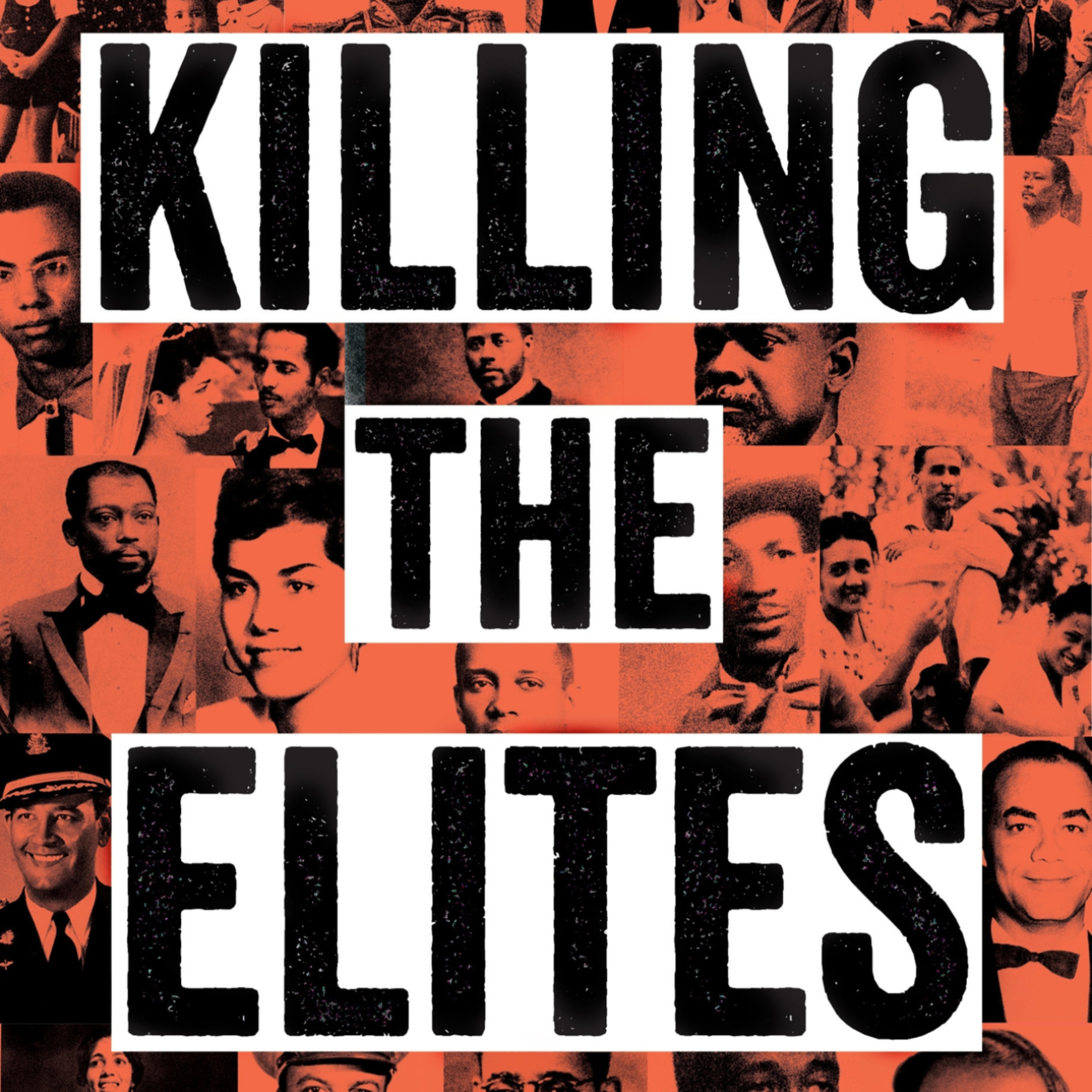
Killing the Elites: Haiti, 1964.
Key points
- Jean-Philippe Belleau studies the 1964 Jérémie Vespers, when the Duvalier regime killed whole families from Jérémie's elite, including children.
- He credits the founders of Devoir de Mémoire-Haïti, who work to preserve the memory of the regime's victims, with shaping the research through years of near daily exchange.
- Belleau challenges the victim blaming he heard in interviews, and distinguishes genocide from massacre by the killers' intent to destroy an entire group.
- He finds that the victims of Duvalier's mass violence were often elites, the reverse of most genocides, and that killers and victims were frequently tied by kinship and social life.
- Belleau explains mutuality of guilt, the perpetrators' view that guilt passes to a person's relatives, and denied intimacy, rooted in exclusion from elite social spaces such as the bal.
- He calls noirisme a half-formed ideology that masked another elite's material agenda, notes that estimates of Duvalier's victims are rarely sourced, and recommends historian Michèle Oriol.
Like my guest today, I’ve never found it particularly useful to cast François Duvalier as some frothing, otherworldly monster. That story is too easy. It offers too little. Once you wrap him in the veil of pathology, the conversation dies. You’ve exiled him to a place beyond history, beyond explanation, beyond us. But what haunts me still—what lives in the marrow of Belleau’s work—is not the spectacle of evil, but its intimacy. The way Duvalier wrapped the Haitian state around himself like a second skin. The way repression was not distant, not sterile, but close. Whisper-close.
This week on the Nèg Mawon Podcast, I sat with anthropologist Jean-Philippe Belleau, and we waded deep into the dark waters of the Duvalier regime—not for the thrill of horror, but to understand the anatomy of power when it is warm, personal, and woven through the lives of the very people it crushes. Here are three strands we pulled from that knot:
1. Power in the First Person
Belleau unearths a truth many prefer buried: that Duvalier’s rule was not built in cold, bureaucratic chambers, but in bedrooms, churches, courtyards. It lived in nods and whispers, in godfather promises and godson debts. This was not Orwell’s 1984—this was something older, more Haitian, more intimate. The regime was not an iron wall; it was a web, spun from relationships and obligations, holding the country not at gunpoint, but by the soul.
2. Who Gets to Be a Victim?
There is a comfort in believing the elite escaped unscathed, that they watched from balconies while the poor bled. But Belleau complicates that myth. His research pulls us toward a difficult truth: the violence had no clean class lines. Elites, too, were crushed, sometimes precisely because they presumed immunity. Belleau invites us to reconsider how history renders victims—how it decides who gets remembered as broken, and who gets blamed for surviving.
3. The Ties That Bind (Even in Hell)
And still—amid the surveillance, the fear, the Tonton Macoutes—Haitians clung to each other. Kinship, friendship, neighborhood, lakou… these weren’t just sentimental relics. They were lifelines. Belleau shows us that even in the shadow of dictatorship, the social fabric didn’t unravel. It tensed, stretched, contorted—but it held. And in that, there is something both tragic and profoundly human.
To understand Duvalier is not to exorcise a demon, but to study a mirror. We cannot afford to look away—not when the terror came wearing a neighbor’s face, a cousin’s smile. Not when history walks so close to home.
Transcript
14,568 words · 63 min read
Machine transcript. Names and Kreyòl words may be misspelled. Tap a time to play from there. Also on Jou.
Patrick Jean-Baptiste Okay. So the book we are going to discuss today is killing the elites, Haiti Nineteen Sixty Four. I found this book quite disturbing in the sense that it's the intimacy of, on the one hand, Duvalier and his in a clique and how he interacts with them. Because I was expecting some kind of cold, distant, remove state sponsored type of massacre, but that's not in the way you described it. This is more of a statement than a question, but you could you feel free to respond. But it was quite disturbing to me how intimate from his discussions with his inner circle to the final outcomes to those families, which we'll get into later. Who was Philip Bello before, and who is he now after publication of this book? What changed and what stayed the same about you?
Jean-Philippe Belleau That's an intimate question as well. Well, I'm an associate professor of anthropology. Before, my original specialization was on the indigenous peoples in the Amazon. So I did very classical, orthodox, even structuralist anthropology. And for most of my career until recently, that's, that's what I was, that's what I worked on and published on. It was really on a totally different world, which was the indigenous peoples in the Amazon Basin. And for the past ten years or so, I've been working on Haiti and the Duvalier regime, but also on sociality, social relationships. And what interested me in the that was actually not the my topic of interest. It was rather the results of the research is, as you mentioned, how an authoritarian regime works in a highly relational society. And I know I'm making a vast generalization about Haiti here by say by stating that it's a highly relational society, but, yes, even if all cultures, all societies, by definition, relational, they are formed of social relations, of course. In some societies, relationships may be more valued and take a more important place in everyday life. And what really struck me when I started to work on the inner working of the regime is how highly relational it was that this Duvalier was not this alienated, removed, remote, lonely dictator. He was immersed in social relationships all his life from his childhood until his death, including his presidential palace. But to go back to your question, where am I now? Well, I'm still working on on on Haiti. My two book I have two book projects going on. One is on on kinship over the past two hundred years and how what are the structures? I believe there are surely no structures of kinship per se in Haiti as in most modern societies. But that's basically what I'm working at the present.
Patrick Jean-Baptiste I'm sorry. You said there's no kinship structure that you could find?
Jean-Philippe Belleau A kinship structure in anthropology means that you have to follow some rules. Who you can marry is dictated by the culture. Don't think that's the case for Haiti.
Patrick Jean-Baptiste Okay. Wow. I'm looking forward to that one. So you feel like a different man now as a result of that research?
Jean-Philippe Belleau It did take a lot of my time. I thought about some aspects of it, sometimes night and day. It may surprise you, but I I've lived with Francois Duvalier for ten years of my life. I thought about him and was not constantly, but sometimes at night I was thinking what went through his mind. The thing is, many people just talk about Duvalier, you know, how he was crazy. He was a madman. He was a psychopath. And that doesn't work. I think we pathologize violence maybe for the past hundred years only, And that's a way to avoid really talking about the subject. I actually met a lot of psychiatrists from the MacLean Hospital. The MacLean Hospital is a psychiatrist institution, which is close to here in Belmont, Massachusetts. And I asked them, what is, what is a sociopath? What is a psychopath? And, clearly that was not the case of Duvalier. They thought, according to psychiatry, a psychopath is somebody who cannot function in society. And Duvalier could function perfectly well, actually it's the fact that he functioned so well that allowed him to rise politically and build a fellowship. And I remember this, one of these psychiatrists asked me, rather than ask me questions, tell me what this guy, what this guy did and how he functioned. Did he have friends? And I said, of course he had friends. He had many friends. And these friendships were very strong, very deep with La Martignard Honora, with Jacques Coriol and so on. And a sociopath doesn't work that way. Stalin probably didn't have friends. So pathologizing Duvalier doesn't provide an explanation. And by the way, I think it was the same thing with Hitler. Hitler is somebody who never betrayed his friends, never betrayed people in his inner circle. He loved his, girlfriend. He liked his friends. He liked he loved animals, And yet he was responsible for the killing of millions of people. That's really a question that cannot be answered easily with by easily pathologizing people. So that question really obsessed me for many years. But now that the book is out, all these questions and Duvalier are out of my system, I moved on to, to other things. However, how the book was going to be received by the relatives of the victims is important to me because I know that certain parts could be shocking. I do decrease the estimate of the number of casualties of the number of people killed by the regime. And I was wondering how this was going to be received and interpreted by by people who were opponents and who are still opponents of that of that regime. And so far, it has been received very well by these people.
Patrick Jean-Baptiste You write that the founders of Duvois du Memoirs, IT, an organization that's dedicated to the memory of the victims of the Duvois regime, had a profound impact on the writing of this book. Can you talk about that?
Jean-Philippe Belleau Sure. I first met them in 2016, so relatively recently. And originally I wanted to keep them informed of the progresses of my research, which I did, but very quickly it's evolved into, into friendships. And we have been communicating every week, sometimes every day, sometimes several times a day, because they also have a very deep knowledge of, of their family experience and they have their own views and experience about how the regime affected them personally. Yes, I forged bonds with them, but that that's also for me, that's a data. The fact that in Haiti can hardly remain an informant. An interlocutor can hardly remain an interlocutor. It's evolving something deeper. And I'm not trying to romanticize, here. I'm trying to
Patrick Jean-Baptiste excuse me.
Jean-Philippe Belleau I'm trying to say that the methodologies of research, the path of research tells you something about society. I think it was Claude Levi Strauss, the French anthropologist, who said that anthropologists borrow their theories from their subjects. And in my case, it was it was true. It's really by realizing how the people I was interviewing and how these just mere interviews turn into relationships, that's when I realized the centrality of sociality in Haitian society. And yet this didn't prevent violence. It didn't prevent authoritarianism, political violence, and so on. But this mix of political violence and sociality is, is very interesting to me.
Patrick Jean-Baptiste Can you flesh this quote out for us? This is what you said. As do most people who write on violence, I felt an obligation to the victims, a mandate that grew stronger as I noted the endemic victim blaming. End of quote. What victim blaming were you talking about?
Jean-Philippe Belleau That there is a discourse that very often when I ask people in general or people who knew something about the Jarian Vespers, why did it happen? They would immediately talk about the victims. They did this and that. Mulatos were very arrogant, or the elite are very arrogant, or they talked about an apartheid system or an apartheid apartheid reality and so on. For me, that was to reorient the responsibility of the killing towards the victims. That's what I mean by victim blaming. If you talk about any other massacres, and I don't want to do a reducio at Itlerome here, but if you talk about the Holocaust, you don't focus on the Jews. You focus on the Nazis. If you talk about the massacres in Guatemala in the late seventies, early eighties, you don't talk about how the indigenous peasantry, where, what they did, what they thought and so on. You talk about the military, the Guatemalan military and so on. So that's what I mean by victim blaming.
Patrick Jean-Baptiste What's the difference between a massacre and a genocide?
Jean-Philippe Belleau Oh, Patrick.
Patrick Jean-Baptiste The the a short version of it. Because I kept thinking about that. And we'll get to why I'm asking to justify why I'm asking this in a minute. But yeah. No. Is it a question of numbers?
Jean-Philippe Belleau No, it's a question of intentions. What's the intention? The definition of genocide is a genocide doesn't name the volume of killing. It doesn't name the mode of killing, that is it can be atrocious or not, or less atrocious. It names the intention of the killers and of the perpetrators, of those responsible for ordering mass killing. And I do believe there's a difference of scale between genocides and massacres. You can have a genocide of you can have an instance of mass violence that can be characterized as a genocide with only 68 people killed. And I say 68 people because I'm thinking about a tribe in the Amazon that was wiped out in the nineteen sixties, and there were only 68 individuals in that tribe. And that was that can be characterized as a genocide. And then you can have thousands of people killed, and that would be characterized as a massacre. That's the problem with genocide. When people use genocide, they think that naming the worst of the worst, but that's not the case. If we use it as a moral value to contain something, the general genocide as a concept. And I know I'm talking in very odd terms here, but at the same time for a scholar, concepts matter, have borders. Not everything is about everything, and not everything is a genocide. The difference between a massacre and genocide would not be about the volume or the atrociousness of the killing, but about the intentions of the perpetrators.
Patrick Jean-Baptiste So if the perpetrators are intentional and it does a sis does a system come into place how it's done? Or is it is it to attach a moral a mo moral value to what's being done? Is that part of the way to differentiate it?
Jean-Philippe Belleau No. I'm talking yeah. I see your point, and it's a crucial one. And I will answer in two parts. The first one, when I talked about the intention, it's the intention to exterminate an entire group. And sometimes an entire group can be exterminated actually without the intention to kill them. I'm thinking about the Tasmanians in that island, South Of Australia. As for the moralization of it, scholars of mass violence believe that all instances of mass violence is a term that is an umbrella term to talk about massacres, genocide, and ethnic cleansing, but all these instances are moralized. That is to convince mass numbers of people to kill mass numbers of people, you need to give them a moral justification. This idea that they are doing good, that if they kill these people, the world would be better. If they exterminate these people, the world would be will live in bliss. You cannot have an ideology, a genocidal ideology that would not be moral. Otherwise it would not work. And that's why the behind these instances of genocide or massacres, you know, to convince people to, to carry these, these out, You have good values. Yield in the name of, of the Bible. The Bible is pretty good. The Koran in the name of communism and on paper communism is good. The name of freedom explicitly. The name of equality explicitly. The French revolutionaries, this sentence, they said, we will kill them all. We will free them all, even if we have to kill them for that. Mhmm. And I remember the people in 2,003 intellectuals who justified the invasion of Iraq in the name of human rights. When an ideology is moral, it's actually at risk of being used.
Patrick Jean-Baptiste Can you talk about some of your research methodologies behind this book? And in terms of you said something about the the results of your research is less voyeuristic, but more terrifying than intimate mass violence. Do you remember that? I do.
Jean-Philippe Belleau Yeah. Yeah. That's Can
Patrick Jean-Baptiste you clear that up for me?
Jean-Philippe Belleau Oh, god. I really wish you had not picked up that sentence because that sentence is not from anyway, the original sentence stopped at less voyeuristic, And I don't want to push anybody under the bus, but the editor told me if you don't add something more, people will not read the book. And she added, but it is more terrifying in order to feed the reader. I'm not very proud of it. I did sign the book though, but what I mean by less voyeuristic is this, Patrick. In the existing literature, if you wanted the or the dominant narrative, the massacre was more, more horrible than what I described. There were rapes, Children were raped. Children were tortured. And what I found out, what I strongly believe happened didn't include these atrocities. There were no atrocities. It depends how you define atrocities. You're killing people with atrocious, but you didn't have these obscene things that certain literature, reversal, like the rape of teenagers and, and the torture of young children. The witnesses I interviewed, were very clear on that and I believe them. And when you think how the military worked, I, there was something that I couldn't quite believe. When violence is spectacularized, in societies that are black, I have my alarm system that goes on and I try to be skeptical. And so that's what I mean, that's what I mean by less voyeuristic, first. And second, I think that the Duvalier regime in, in general contained less again, that's my I understand that might be shocking to a lot of people, but was less the violence was less spectacular than, than what we think it was. If you compare with what happened in the Ex Yugoslavia or in even on the other side of the border, the Dominican Republic and Trujillo, where Trujillo served as meat to prisoners, the bodies of their children. Yeah. That happened in the Dominican Republic. It didn't happen in Haiti. I'm sorry if I'm talking very things that are actually very horrible, but and even if you talk about that massacre, 27 people, for me, that's a massacre that absolutely obsessed me day and night for, for years. But I remember when I, even now, when I talk about it to other scholars of mass violence, they open their eyes wide and say, you're interested in 27 people only. They work on huge numbers, on numbers that are way, way higher. And that's, I think, is something that is very important when we look at the history of Haiti and violence in Haitian history, the numbers are actually low. And I understand that might be shocking because we had, we didn't have endemic violence, but repeated violence throughout the nineteenth century and several moments in the twentieth century. But if we compare with the rest of the region, Central America in particular, or Latin America in general, the numbers are relatively low.
Patrick Jean-Baptiste Are you focusing on the numbers in terms of devalue specifically or the history of the country?
Jean-Philippe Belleau Post independence history from Post independence. Yes. If we look at a country with a comparable population, Guatemala, which has roughly the same number of people, The genocide of the Mayans in the from 79 to 83 killed probably at least 300,000 people. The people, maybe more. That's almost an abstraction. That never happened in Haiti. Then at the end of what is characterized as a civil war in 1883 between the Liberals and the Nationals, between Boiese Bazely and, and Salomon, there is this, there's this extraordinary book by Jean Price Mars about Boiese Bazely. And at some point in the book, he gave the number of casualties on the liberal side in Miraguan. Miraguan was really the center of that civil war. And it's, I think it's thirty, thirty four people, 34 people. That's not a civil war to me. An infra elite conflict. When you look at the number of casualties in other civil wars, and even talking about Spain or the US civil war, which killed half half a million people, but in Salvador, in Peru, in Guatemala, in, and so on, it's the, the numbers are, are in five or six digit. That never happened in Haiti, except in 1812. I think I believe but that's another story because the memory of 1812 was totally gone by the time of the Duvalier regime. But in 1812, to my own estimate, eight thousand people were killed, between eight and twenty thousand people, but more likely towards 8,000. Otherwise, the numbers are always relatively low and gendered. It's usually men who are killed and almost never their families, except in 1812 and during the Duvalier regime. That's why the Duvalier regime, I believe, was really traumatizing. It really shocked society. That's because the regime went after women, mothers particular, and children, and even grandmothers. And that, I believe that the society didn't expect that. And that's pros prop, that's what was intentional on the part of Duvalier, that this, you have to break the norms of political violence to obtain a regime of terror. Otherwise, it doesn't work.
Patrick Jean-Baptiste Did you do we know in general that's father and son, how many victims of the Duvalier regime? Is there is there a number out there we can work with?
Jean-Philippe Belleau I worked on that on a different paper with I tried to find a methodology to evaluate that because all the numbers I've seen in the literature went from, I think, 20,000 to 150,000, but every time, none of these numbers were referenced or referenced methodology. How did you know, the number that usually comes up is 30,000, but I've never found the literature where does this number come from. So I try to reexamine that. And I reexamine that in the light of other mass other mass killings in other societies in the nineteenth and twentieth century. And to obtain 30,000 people, 30,000 dead, you cannot kill them on a drop by drop massacre. You need to have mass killing at the same time. You need to have massacres. One instance at a time of massacres with large numbers. And I've only found, what, about five of them. The 1963, the April, I believe between 204 people were killed. In itself, that's a major event. We, I think that's one of the most under researched event in Caribbean history. Then there was the Qazal massacre. There were probably a 200 people killed. There was another massacre in Guanaement. And probably the largest was in June 1964 in the Tjot region. My friend and colleague Anne Fuller is actually writing a book on it. And she came up with a number between 204 people killed, which was the largest massacre in during the Duvalier regime. But if you add up all these massacres, you barely reach 1,000 people. That means that all the other people were killed, not in massacres. So I wondered where were they killed? Were they killed in the street? By, by whom? And so instead of looking at the methods of the reasons, I looked at places. What are people? Where were people killed? So some people were killed by Macoute for material reasons, especially in the countryside, to steal their land in particular, to appropriate their land. But these were very few. The Diedrich, Bernard Diedrich, talk about that, but we don't get to a lot of, to, four, a four digit number with that. It's pretty clear that most of the people were killed in Fort Dimanche. And that was really the place where people were brought and either executed, or I believe And again, what I'm talking about is an estimate without archives, because I should have started with that. In other, in Chile, for instance, with the Chilean dictatorship, we have archives and we know exactly how many people were killed. I think it's 3,000 and something. When we don't have archives, as in Haiti or in Argentina in Argentina, the Argentinian military bureaucracy didn't keep a record of whom they killed. When you don't have archives, it's difficult to and it's especially difficult to do that sixty as I'm doing, sixty years later. And sometimes it's akin to a finger in the air. But it's pretty clear to me that the that Fort Dimanche was that people were brought to Fort Dimanche to let them die. There are, to my knowledge, only four memoirs of people who survived Fort Dimanche and talk about that, how people died in Fort Dimanche. There were, to my knowledge, only 10 cells, which were made, I think, for five or seven people. And they would put 30 people at one time in each cell. The conditions were don't ask, mephistic. And they had between one and three hundred, if I remember well, one and 103 calories per day. So you can imagine that unless you had an extraordinary immunity system, your chances of survival were very, very low. But now how do we calculate how many people died in Porto, in, in Fort Dimanche? So I gave an estimate that is extremely wide between eight thousand and seventy thousand, but it's more likely, I believe, between eight thousand and twenty thousand. But I think it's unlikely there were, that there were less than 8,000 people and unlikely that there were more than 20,000 people killed. It's still, it's actually enormous given that the population at the time was around 4,000,000 people. But it's, I, when people talk about thirty, eighty, one hundred and 50 thousand people killed, my frustration is that they don't explain their methodology. How did they get there? There were other places where people were killed. The, but at the Penitancy National, to my knowledge, or in the, people were not killed. They were tortured. They were beaten up. They were arrested. They were imprisoned for war. And then they were either liberated, freed, or they were brought to Fort Dimanche.
Patrick Jean-Baptiste And the three almost four years now of this podcast, I think I've got 82 episodes done with dozens and dozens of scholars I've had here as guests. The Haitian elites are always portrayed as the benefactors and the perpetrators of mass violence. So until I read your book, these three words never existed for me. Elites as victims. You went on and said this. This pattern of political violence against the country's elite over the long duration is paradoxically both widely documented and strangely overlooked. The historiography has recorded the facts, but scholars have not drawn conclusions. Dominant focus on ethnic and ethno religious identities and differences frames the scholarly gaze. There is no entry for the elite and our contemporary taxonomies of victimization, end of quote. Until I started getting into the actual the people involved and how they recorded that, that's when my mind began to change to start looking at them differently. Please go ahead.
Jean-Philippe Belleau So first, that's the results of the research. That was not at all my study hypothesis. But I realized and actually, for me, that's something that is screaming, that most of the genocides, or rather the canon of genocide, that's the Holocaust, the Armenian genocide, the Rwanda genocide, the Cambodian genocide, and the mass killings in, in China under, under Mao and in The Soviet Union under Stalin, in all these instances, the victims were constructed as elite, without exception. I'm not saying that Jews were killed because they were elite. They were the Jews were killed because they were Jews, But the Nazis constructed them as elite. And they are still constructed as elite. And that was the case of the Holodomor, that was a mass an engineered famine in Ukraine in nineteen thirty two, thirty three, during which about three million people died, and that was an intentional famine. These people were the poorest of the poor, but for the regime, they were the elite. They were rich farmers. Same thing in in in China during the Cultural Revolution. In Cambodia, they eliminate, eliminated everybody who could read and write. The Rwandan genocide is even more clear cut. The Tutsis were constructed as, as hateful, as racist and as rich, even when there were none of these. The Armenians were also very clearly, less documented, portrayed as as rich, as sophisticated, arrogant, and so on. And when I looked at the, first at the, the Jeremy, the Jeremy Vespers, the Jeremy massacres, we have 27 people here, three families who belong to the elite. And, where were they killed? So I decided to look at the entire Haitian history and that also happened in April, June, July, '18 '40 '8, in 1882, in Saint Mark in 1883, in 1902, in 1908. Members of the elites were killed, not necessarily because they were elite, but because of a combination of factors, being elite, being opponent, and being man, being that these massacres were also gendered until the Vallee. For me, that's I don't remember a case in Haitian history where the peasantry was massacred, or there were not massacres because there were peasants. And in Marchate, and Marchate doesn't work because they were killed by The US troops. The identity of elite I understand your point because that's the starting, that's the paradigm, the elite as perpetrators, but it doesn't it's not contradictory. It's it is contradictory, but we have the two phenomenon at the same time. We have a highly hierarchical society with the inequalities we all know about. It's not that I, I showed up. I lived four years in Haiti. I've seen things that I still remember twenty years ago, thirty years ago. I still remember. I remember this kid in La Saline who couldn't sleep at night because there was water and he was arrested, and he had to, he had learned to, to sleep standing. I'd never seen such poverty. Sure. But this, the poor, and for me, that's also true for all the other instances of mass violence I mentioned, the poor are not the people who kill. The elites are always killed by the state. That is by other elites. And not necessarily emerging elites, but they are killed by other elites. So to a large extent, the genocide happened to kill elites and to get rid of them. And Michelle Oriole, who is a Haitian sociologist, who is really Patrick, you need to interview her. She's What what's her name? Michelle Oriole.
Patrick Jean-Baptiste Oriole? Okay. She
Jean-Philippe Belleau chose never to to leave Haiti. She's still in in Haiti. And she's an extraordinary scholar, really. But she told me this, Haiti has never been able to capitalize on its elite. The fact that the elite were and actually Matthew Smith wrote a fantastic book about that, about the flight of elites, especially the flight of educated people. And they didn't flee just because of economic, the economic situation. They also fled for, mainly for political reasons. The cost of that is huge. That's not the only reason why the country is in this situation, but that's for sure it contributed to it. Now I know that I haven't answered your question. You can have exploitation by the elite, disenfranchisement by the elite, marginalization by the elite, But then the elite becomes, you know, what Levi Strauss called a floating signifier. Who is the elite exactly? I was interested in something years ago in 02/2006. Something that really surprised me was that in the Biddonville in Haiti, the dwellers are renters. And in the rest of Latin America, in Colombia, in Brazil, the dwellers are owners. They own their shacks, their small house and so on. In Haiti, they don't. So who are the owners? The owners are the social class that is right above. The owners of the Biedonville dwellings in Cite Soleil live nearby in Del Madue, in Lower Delma. So it's not the middle class. It's something like, you know, a world of artisans, if you want. And these are the owners of and this, and that's how very often gangs were born. These were people who were going around collecting rants. That's not the elite. That's not the elite who was exploiting these people. How did the elite When we compare the Haitian situation with comparable societies, we actually don't find comparable societies because we didn't have really the Latifundia system in Haiti. Like you had in Brazil, Colombia, Cuba, Dominican Republic, and so on and so forth, and Mexico and Guatemala and so on. These huge estates with a labor force, a peasantry that was attached to that, to that clan and owned by all the Yorks. After independence, as we know, the slaves turning to, to farmers and own small plots. So the exploitation didn't work that, didn't work that way. Even though people have insisted, Michel Durov Trio and so on, about the Corporador, merchants and so on. Sure. But it's not the type of, and level of exploitation that you would see in other places. You know, for a scholar to, to talk about that, you wouldn't believe what colleagues have told me, including in my department and good colleagues of mine at the places, they, they get upset and morally outraged that when I present my subject and I say that it is a victim, for them, it's morally outrageous. And they started to sus they started to suspect me. They look at me, what is it trying to do? Am I myself from an oligarchy or from For the record, the four of my grandparents were born on a farm. So I don't come from the elite, to say the least. For me, it has to be said. It's not because people are considered upper class that they are necessarily not victims. If I can continue just one minute about that. The richest family that was killed in, in Jeremy in '64 were the Saint Saric. They were considered by many as the richest family in, in Jeremy. And I found it very interesting that their two old elder sons, Daniel and Hadrian, became communist. I have this picture. I have this incredible picture of Che Guevara and Daniel Saint Saic together in The Congo tells us something about the, the not the elite, because I by the way, when I talk about the elite, I'm not talking about an objective sociological fact. I'm talking about how they are seen by other people. If you want to a large extent, it's like race. Race has no scientific basis. Elite can be a useful concept, but it's, it's a muddy one in, to describe, to define it in objective terms. Now, yeah, I've lived long enough in Haiti to know that some people are elite who are immoral. I know some. I know. I'm not going to give any names. Some people who have no scrapples whatsoever. Yeah, sure. But to believe that people are inherently immoral because of their identity, because they believe to that or that sector. The gang leader of Cite Soleil who killed 200 people, when was that in December? Because his son was sick. He didn't belong to the elite. So it's more complicated than that. I don't think that social class is a determinant in being in doesn't determine, doesn't sometimes doesn't determine behavior.
Patrick Jean-Baptiste You mentioned three aspects of mass violence. One was what you just discussed, the victimization of the elites. The second aspect you described as the role of social ties in determining behaviors and decisions within and outside of the representative state, a repressive state. And then you break that down. I don't expect you to define all of it, but I just sort of contextualize this for the audience. And within the role of social ties, which is the second aspect, you break it down into three subcategories of focus. You talk about social ties between perpetrators and victims among the regime's members, the Duvalier regime's members, and within society at large. Now the third aspect you mentioned is how some regimes target entire families rather than specific individuals at home. For those at home, it's on page 23.
Jean-Philippe Belleau That's, where do you want me to start? Social ties?
Patrick Jean-Baptiste Yes. Social ties. We already talked about the victimization of the elites. So social ties. Talk about that within the context of the Jeremy Vespers.
Jean-Philippe Belleau Sure. So social ties between perpetrators and victims.
Patrick Jean-Baptiste Social ties between perpetrators and victims among the regime members and within society at large.
Jean-Philippe Belleau I will actually start by social ties within the regime. Okay. When I interviewed officers of the presidential guards, what really struck me was how social the Presidential Palace was. It was a place of conversation and a place where everybody knew everybody, where people socialized with their colleagues. At some point, I wanted actually to do a map of the Presidential Palace and locate everybody, the Duvalier family, the secretaries, and so on. It was a place that was crowded with people, with functionaries, with and with the presidential guard. The presidential guard lived there day and night. They slept there. And not all of them, but those who were on duty. The First Ground, the Ground Floor of the Presidential Palace was actually occupied at night by people who were sleeping there. Duvalier had organized that because he wanted to be protected. To a large extent, the Presidential Palace actually looked like a military barrack. But all these people socialized during the day and outside of work. They knew each other. What really struck me was the testimonies, not just of the officers of the presidential guard, but with the children of the regime, of Clovis Desinot and, Franz Desvarieux, David Denis and so on, is that Duvalier loved to talk. He would get out of his office and just engage in random conversation with people of all status, of presidential guard officers, with makoots, who were illiterate, with ministers and so on. So the social ties were very strong. Daniel Tschuppice showed me the correspondence, the private correspondence of Duvalier with people all over the country. And he entertained a correspondence that is let he wrote letters and received letters from people of all social conditions. That regime was immersed in, in social relationships. And when you have bonds with people, that creates social obligations. That creates social obligations in particular not to hurt them. And that's a contradiction because the Presidential Palace was a lethal place where you could be over, from one day to the other, you could be a high ranking regime members and the day after you could be imprisoned in Fort Dimanche. So it was a place of social relationships, but also a place of denunciations, of intrigues, of, of betrayal. And, but betrayal was always intimate. Now that links actually got interrelized with social ties within the society. That is, at some point I try to calculate, to give, to do quantitative analysis of how many people that did every, did each of these Richem member know, let's say in early 1960s. Because all this world, we also have to understand, lived for most of them in one neighborhood, which is Bapucheaus. The Bapucheaus neighborhood in Downton, Port Au Prince was really the stronghold of the, of la class, which used to be called la class, the black middle class. And they knew each other from that time, from the forties and fifties, where they lived together before Duvalier ascended to power. And the relationship were not like dyads between two people, but within families. Families where friends together, socialize together. So the bonds are very strong and extensive. They work like I don't like too much the the theories of social networks, but in this case, it would be operative to talk about very vast social networks. Now, when one member of a family was arrested and they knew somebody who knew somebody in the presidential palace, they would activate these relations. And very often it worked. It worked with, and told me how he was freed. I think he was imprisoned in 1959 or '61. He could have been executed as his brother had been, Roland Chassagne, but he was not because somebody intervened, his mother, if I remember well what he told me, his mother intervened before somebody, a minister she knew a minister in the government who intervened directly before Duvalier, and he was freed. And I've heard dozens of such similar accounts. To know somebody was not a guarantee to be freed. But what really struck me there is the absence of ideology in the decisions. That is Duvalier took somebody in his government, in his regime, in his inner circle, not on political, ideological grounds, but on social grounds. He knew personally every person. He already had a relationship with every person who was in his government, and he had dozens of government. I think he didn't have a single government that lasted more than a year. So that was really a door. These relations, for me, these relationships, and very often kinship relations, were key, are key to understand how how people were freed, what type of and sometimes sometimes it didn't work. That's the case, for instance, of the 19 military officers who were executed in 1967. Duvalier knew each of them personally. He knew Sonny Borsch. He knew each of them personally because they all of them worked in the Presidential Palace. We saw them almost every day. And they had many friends within the presidential palace. And some of them tried to intervene, and it didn't work. So that brings us to the personality of Duvalier himself, which was peculiar. It's pretty much certain that he killed himself, his own brother-in-law, Lucien Domet, I believe in 1962. Lucien Domet had been in prison. I believe he was in the I forgot if he was in Fort Dimanche or in the Pinitants Internationale. And Duvalier went to talk to him and he lost his temper. He grabbed the rifle of his aid and he just shot and killed Moussaint Hommes. Moussaint Hommes was his friend. He was his speechwriter during the nineteen fifty seven campaign. And he had kinship ties with him. And yet he committed that horrendous moral violation by killing him. This mix of, of social ties and of intimacy and the intimacy of killing might be unique. I don't know any other regime where that happened. It happened a little bit within the inner circle of Stalin, which was a very peculiar place. But in the case of Stalin, we're only talking about three or four dozen people. In the case of the Duvalier regime, it's of another scale. Now, another aspects of that, which I which might be unique in the analysis of authoritarianism, is the fact that Duvalier had a personal relationship with every single of the regime's henchmen. That is the people who killed Zachary Delva, Astrid Benjamin, Jean Tassie, and so on, the killers of the regime. And, did Richard actually wrote a bit about them. They had a personal relationship with them. I believe that's unique. In none of the other authoritarian regime, in the military regime in Argentina, in Chile, and so on, Did the killers have a personal relationship with the dictator? Even what was in them, Vasili Blokhin. Vasili Blokhin was responsible for the killing. Personally, he killed about 6,000 people under Stalin in the 1930s. Killed them personally with in the basement of the NKVD, the secret police of the Soviet Union in Moscow. But between him and Stalin, I think there were five or six degrees of separation. That Duvalier felt that he needed to have a personal relationship before hiring somebody as a henchman, as a killer, is fascinating and tells a lot about Duvalier's personality. I think that one of the reasons for that was actually utilitarian. It is that he didn't trust the military or even the macout who carry out the most atrocious task of the repression. However, and again, that might be unique, these henchmen, Jean Tassie and, and I forgot her name. She, the famous lady who was the?
Patrick Jean-Baptiste The head of VSN?
Jean-Philippe Belleau Yeah. Yes. So you see what I'm talking about. I'm blanking out. They participated in the formal events of the regime, the formal functions. I have some pictures that are really, really incredible, where there's a concert for instance, or something cultural. And we see the henchmen sitting right by side, side by side with ministers, Crovus Desinots or Boire, who had nothing to do with repression because Duvalier completely compartmented the working of this regime. You had the people in charge of repression, people in charge of the economy, in charge of bureaucracy, and so on. And they didn't mix. They mixed socially, but one wouldn't Only the people in charge of repression did the repression. Now to answer your first part
Patrick Jean-Baptiste of the
Jean-Philippe Belleau question, relationship between perpetrators and the members of the regime. Sometimes they were, they were, very often, they were kinship relations. The chief of staff of Duvalier from, I don't want to get my dates wrong, but I think from '61 to '62 was Pierre Marcelin. Pierre Marcelin was a Jeremy Mulatto who had kinship ties with every single victim of the Jeremy and Vespers. That's something. We can see this happening in over and over. You really have to be interested. You have to be a peculiar and an anthropologist to be obsessed with genealogy as I am, but I did hundreds actually of genealogical trees. And I was stupefied by realizing that most, many of the members of, even of the henchmen and members of the regime, were related by kinship to victims. I'll give you another example. The most known example that you know about, we all know about, you know, the daughter-in-law of Dominique Pasquet, the military officer who carried out the first coup was Michel Bennett, who married Jean Claude Duvalier. That means that the children of Pasquets sorry, the grandchildren of Pasquets are the half cousins of the grandchildren of Francois Duvalier. For me, this is an outcome, a result, if you want, but or an epiphenomenon of a highly relational society. And again, that's a theory. That's my theory. But I think it had the effect of probably limiting the scale of violence. It's as cognitive sciences, especially Randall Collins and Munizah Malevich, who are sociologists, have shown, it's very difficult. It's impossible for human being to kill. We are programmed not to kill unless you're a sociopath or you're fanaticized to extremely fanaticized or for other extreme reasons. So to obtain killing, you need to either brutalize people or you need, as Duvalier did, to have a knack for sociopathic individuals. Like Jean Tester was probably a sociopath and so was Astrid Benjamin. And I believe Yeah. So I think for me, that's the link between sociality and repression. I could not think of any other author authoritarian regime where this happened. If you look at the, the repression, the military repression in Chile, or the vast military repression in Guatemala, this was carried out anonymously. The military that's why we have military. Militaries fight militaries. They fight people they don't know. When you fight people, that's a very different story.
Patrick Jean-Baptiste I think the person you were thinking if I looked it up is Madame Max Adolf.
Jean-Philippe Belleau Thank you.
Patrick Jean-Baptiste I wanna get some definitions out of the way here. What role did noirism play in all of this? You spent some time, a few pages on that.
Jean-Philippe Belleau Sure. I'm not a specialist of noirism, of noirism. You have other people who have worked on it better, but noir is really a half baked ideology, if it's an ideology at all. And, might even be more a set of representations than a full ideology. But yes, noirism is what proposed Duvalier into power. He himself had written several pieces with Lorrie Mardonny who were, that were noirist. There were either ideologues of noirist, of noirism, d'Ors. David Laferriere, Vincent Laferriere, and later what was his name? Picquion, Henri Picquion, Enochtroyo as well. But it's a very strange ideology because it's to have noirism, you have to noirism is both an analysis and a program. Provides an analysis of society. Society is divided into two sectors, the elite and the masses, and it provides a solution. The solution is that it's to take power. Is that power should not be in the hands of the elite, but in the hands of the masses. I like a lot the analysis by Robert Fatin, for whom noirism preceded noirism. That is, if the term noirism was coined, I believe, in the forties, and is usually associated to a very short moment in Haitian history from the forties to the sixties, Robert Fadden actually uses it, uses the term for the entirety of, of Haitian intellectual history. And I think it works out because if you look at the works by, in the beginning of the twentieth century or by Louis Joseph Genevier, they can be, they should be categorized as, as, as, as, this resentment against, against mulattoes. But at the same time, it's a very strange thing because it turns mulatto into an object of stigma, but I don't know any other identity. I'm talking about the mulatto identity that would be both stigmatized and desired since the beginning and since the, since the post independence period. There is a fantastic piece by Daniel Aferriere, which is titled, I have to say it in French, Rade houssons et mule a tresse. It's, it tells the story of, of a party and arrives. He doesn't name Rene Picquillon, but it's understood that it's, you can recognize Rene Picquillon. Rene Picquillon was this noirist, ideologue in the nineteen sixties. He arrives at the party and immediately asks, where are Houssensie Milatresse? Where are the Milato women? And Daniela Ferrier, who really had, the genius and the nastiness I'd say the nastiness in a good way to to really point where it hurts. That these men, the forties the men of 1946, of the revolution of forty six, not all of them, had this resentment against mulatto, but this desire for mulatto woman. And I think Daniela Feia really pictured that very, I think, very well. I want to link that to something else, something that has been written about since the nineteenth century, so it's known since the nineteenth century, is that noirismo was actually very much about getting government jobs and not it was not a socioeconomic program. Interestingly, it was Salomon, and Salomon was called de mulatre, mulatre, that to describe how he was perceived, at least as eating mulattoes. But as Salomon was married to a French woman, a white French woman, his daughter was a mulatto woman who married a mulatto man and so on and so forth. But Salomon said, speech, I believe in 1881, that he couldn't believe that all his opposition wanted all the men who were opposed to his rule. The only thing they wanted was government jobs. By the way, he used the term in English. He said jobs. All they want are jobs in the government. And you find that all the way to Duvalier. When Duvalier was interviewed about his socio economic program, he couldn't answer. He talked actually about government jobs. This lack of any larger socioeconomic framework that socialism can provide very easily. He had no idea and no ambition to to he did a David Nichols talked about that very well. Not in his book on on the devalue regime on on earlier in her earlier writings that the whole nineteen fifty seven campaign contained almost no program whatsoever, except to take the presidency and take the government jobs. If I can just add one sentence, there's a book by, I forgot his first name, but Bouson, B O U Z O N. The entries in the bibliography of my book, who wrote about that as early as the eighteen eighties.
Patrick Jean-Baptiste That
Jean-Philippe Belleau the Nourist ideology actually hides very material, a material agenda by the elite, by other elite.
Patrick Jean-Baptiste Another definition I want you to work through for us. What is mutuality of guilt?
Jean-Philippe Belleau It's the notion that so I'm talking about mutuality of guilt in the eye of the perpetrator. It's the idea that someone who committed or is seen as having committed a crime is not the sole perpetrator of that crime, but the people who are related to him by kinship also share responsibility. That happened during the Duvalier regime, but very strangely, it didn't happen systematically. I referred earlier to the nineteen fifty eight coup by Pasquale and Dominique. Their families were not threatened. They were not arrested. Nothing happened to them. On the other hand, in, in Jeremy, entire families, the kinship was the rationale behind the arrest. People who are related to, in the case of the Drouin and Ville Drouin, who are related to men members of the guerrilla, of the Genaiti guerilla arrested and executed. But at the same time, it's not true because the Neumann family, Marcel Neumann was a member of Janaeti. He was not Mulatto. He was, he was a black man. From, from a family of coffee traders, I would say relatively well off. Actually, his brother was a diplomat for the Duvalier regime in Africa. His family members, the family members of Marcel Nima, were arrested, but eventually they were freed. So it's really the combination of these two identities at a specific moment, being a member of the elite, Mulatto, and having a one of their members in the in a guerrilla that that could be lethal. Four. Anyway, that mutuality of guilt. That's what I mean by mutuality of guilt. Notion is slightly different from collective responsibility. It's really more relative to kinship. And that's something we have seen in other regimes. In it's still happening in North Korea when when an entire family could be can be deported to a concentration camp because one of their members is suspected.
Patrick Jean-Baptiste So basically it's from the viewpoint of the perpetrator to justify what has to be done. Right? So they say it's not just me that's guilty of doing this. It's you giving me reasons for me to do this. Right?
Jean-Philippe Belleau Yes. And there's two way to to look at it. One would be, I would say, strategic or utilitarian. It's the notion that if we don't kill the children, we'll seek revenge for the death of their father. The other way would be much more traditional. It's the notion that guilt is shared throughout, is transmitted by blood. But, actually, we I believe we shouldn't separate the two because they blend. Why would people seek revenge if not if they feel extreme allegiance and identity fusion with their kin? If you look at the members of Jeune IT, I believe there were five or six who joined Jeune IT in 1964 because either their father or their brother had been killed earlier by the regime. There is this moment when I interviewed William Regala, and that was, I can tell you, I some of the people I met were fascinating. And their I have to say their caliber there were these were impressive people, even if they were not admirable. But William Regala was a tough guy to, to maneuver. And I interviewed him in his, in his, in the garden of his house. And for, I don't know, a good two hours, he just talked, I don't know how to say that in English, no, langue de bois. And after two hours, he started to say anecdotes that were relevant. And he talked about that moment when he has to bring a message from the presidential palace, from Duvalier, to Jean Tassie, and he meets in the secret police station. And he sees Jean Tassie torturing a guy, a victim. And to the side, there is this other member of the regime. And right now I'm blanking out of this. He was a pastor. He was known because he was known to torture people with a Bible in hand. And I felt like surely it was just a rumor until Regala confirmed it. And that pastor said, you have to kill the entire family. Otherwise, they will come back to haunt you. And Regala characterized him as the ideologue of the regime. I think it was Zachary Delva, actually, if I remember well. This notion that you have to kill, that you had to kill entire families, to my knowledge, that was actually new in, in Haitian history. That didn't happen earlier. Earlier, even Salomon didn't target families. He only targeted men, adult men, who were active in, in, in political opposition. There's this moment in January 1884, where he visits, where Salomon, President Salomon, Lucius Felicite Salomon visits Jeremy as an act of reconciliation. And it actually, it's a trap to attract the people who were opposed to him. And he has them arrested after a mass in front of the cathedral. I think there were about three or four of them, and he has them executed because they had led the opposition to him militarily in during the entire year of 1883. But he killed he only had them killed. The entire family who was who were present with them, they were left alone. They were not and same thing with Antoine Orpheumain. Antoine Orpheumain never went after the family of, of not Antenorferma, I'm talking about no Alexei, he went only after Antenorferma, not after his family. And he could have, he actually had There's this moment that is described in one of Roger Guaya's books where the, Antenorferma flees the battlefield after his defeat. That happened in 1902. And the officers of, of Novalexi capture Antenorferma's wife. But instead of arresting her, you have this moment that seems taken from medieval chivalry. And they said, oh, madame Nousalom vousas, Nousalom vousas cortisius cache vous. We go to, you until your home in Port Au Prince. So you have this gallantry, which I think the society was used to and expected until this mutuality of guilt that happened. But that happened late. It didn't happen until 1963, '6 years into his regime.
Patrick Jean-Baptiste Did you if it's so exceptional in Haitian history, did you look into the roots of that? What changed? What was the permission structure that made that okay now?
Jean-Philippe Belleau You mean the cultural elements into it? I'm trying to not to go into this. That could imply some culturalist generalization. Although some scholars like Michel Oriole believes that animism is a strong dimension of Haitian culture, Haitian society. I would be more careful, but I think it does appear from time to time. I did refer briefly earlier to something that really struck me a few months ago that happened in Sittes Soleil. The gang leader in Sittes Soleil had about 200 people executed. But who were these people? They were poor and they were old women who were suspected of witchcraft and of having rendered his son sick. Tzanimism. It's this notion that substances, ideas can be transferred from one person to another. You find that in all societies, even the most modern. That's, there's no doubt about that. Philippe Descola, a French anthropologist, talks very well about how animism is still very much part of all human societies and probably of human cultural structures. But still, it doesn't explain why it was dormant before Duvalier and dormant after Duvalier politically. People yes, Duvalier destroyed the structures. And to a large extent, I believe, and that's one of the long lasting effects of Duvalierism, he destroyed the rule of law and public institutions. That's the main damage inflicted upon society.
Patrick Jean-Baptiste What is relational exceptionalism?
Jean-Philippe Belleau So it's what I referred to earlier when I talked about relations. It's, it's a theory. It's this idea that we are less likely to hurt somebody we know. It's as basic as that. But why do I talk about this? It's because the entire classical literature from the Bible about Cain and Abel and the Greek tragedies tell us that intimacy is a source of danger. And, you have not just many classical texts, but also many studies about mass violence and genocides in Rwanda and so on, tell us that intimacy is a source of danger. And I don't believe it. And for me, it doesn't hold, yeah, sure you have here and there some, you have husbands who beat their wife and kill their wife. Sure. That's intimate killing. But if we look at patterns during instances of mass violence, it just does not happen. The evidence I've read, and I believe I've read almost everything on the Rwandan genocide, which argues that people killed their friends. It's not true. People killed their neighbors. Not a single time did they see somebody who killed their immediate neighbor. So relational exceptionalism is this idea that if you have a bond with somebody, it becomes cognitively nearly impossible to kill. Unless there's very, really a con ques de circumstance, a context that renders, that forces them to that. That happened in '67. For instance, Duvalier was very perverse. Here, force officers of the presidential guard to execute their friend, their closest friend in that, in that, during that execution of the 19 military officers in 1967. For instance, what was his name? Dominique, who became the husband of Marie Dennis, executed Etacy, who was his closest friend. But he was forced by Duvalier and apparently had a gun pointed at him too, to make sure that he was going to shoot. But otherwise, in normal circumstances, it doesn't happen. Let me say this. Duvalier is credited for having said, if you're loyal to me, you have to be able to kill your children, for me. If there's a society where this just didn't happen and would not happen, it's Haiti. He said that probably because he felt, he knew that it would not happen. And he was insecure enough about his own hold on power to say such a thing. But where did it happen? I didn't find a single instance in, during the repression of the Duvalier regime where people killed or denounced people they had a bond with. And when people denounce an acquaintance, which happened for instance in the case of Etienne, the soccer player, that immediately triggered tremendous outrage.
Patrick Jean-Baptiste What is denied intimacy? And how is it tied to the quote unquote elite and their fate? The four waves of executions that happened.
Jean-Philippe Belleau Yes. So I live here in Massachusetts, and I feel less than about a mile, maybe a mile and a half from where I live, there's a club, a country club with a golf cl- with a golf course. It looks fantastic. It's a beautiful building. I know there's a restaurant inside, but I've never been inside. I would love to be a member of it and have access to it and have drinks there, but I was never invited and need to be co opted to be, to become a member. The thing is, I know nobody who is a member there. In Jeremie, there was a club, the Excelsior, and because Jeremie was a small town, everybody in town knew everybody who was a member and everybody who went to the parties of the Excelsior. There was intimacy there. Intimacy in this case was the fact that the elite lived in full view. Everybody saw their house, their faces, they could talk to them. There were their employees, their equals. Sometimes they had sabal turns. Sometimes they were just neighbors, distant neighbors. But everybody knew how they dressed, who they wear, their tastes, their history, and so on. The retreat struck me that the elite, the, these elite families had actually no privacy to a large extent. And when it came to marriage and matrimonial strategies, who you marry, you knew who dated everybody. That was not just true for the elite. And what also struck me, and it's very clear when I did this historical ethnography of Jeremy in mid, in the mid twentieth century, is that all this world was immersed in social relationships. That is, people walked from their home to work and on their way, they would stop in the gallery, in the veranda of houses and engage in conversation. Everybody could talk to members of the elite or the middle class or the upper class. You had a familiarity between people of different social classes, which is not democracy, of course, which is not equality, but you had this familiarity. But this familiarity stopped at marriage. When it came to marriage, the elite married within the elite. When it come to invitation to the excercio, the parties at the excercio, les balle de excercio, which triggered so many social fantasies, the non elite people were not invited. And this this is what I mean by denied intimacy. Intimacy, familiarity could go so far, but at some point they were the wall. The world of the veranda is very interesting because people could go into the veranda, be offered juice, water, talk. So you had an exchange. You had reciprocity. The words are exchanged. It's important when words are exchanged and you build bonds. But to be invited inside is a very different story. There's something that struck me when I lived in Haiti, how long the Sundays were. Because on Sundays, I was not I was rarely invited anywhere. Because a Sunday is the really the moment when the family closes on itself. And have the lunch is a moment, a sacred moment when the family, the extended family groups, the strangers, stay outside. But otherwise, during the rest of the week, you have, I've left Haiti Ward more than twenty years ago, and wow, I still have more friends there than here. That's what I mean by a relational society. So Jeremy was this highly relational society where the elite was immersed in role in sociality. And by the way, that's why I believe that the apartheid metaphor really doesn't work. It was the opposite of apartheid. Apartheid means separation at church, at school, in sports club. And this was not the case in Haiti. All these social classes were mixed to some extent, but not for marriage, not for parties, not for the Sunday lunch. That's what I mean by denied intimacy. But denied intimacy relates to, I believe, a very strong, dominant ideology in Haiti. And it's even part of, I believe, of the identity, which is equality. And that may sound like a contradiction because it's a highly unequal, hierarchical, vertical society. But at the same time, as Gerard Barthelemy and many others and Alex Journe have shown, it's a society where egalitarian ideologies are very strong. And denying intimacy is a product of that. You have familiarity and expectation of being included, but you're denied. You're rejected. You have the expectancy, you expect to be included because of egalitarian ideologies, but you are excluded because of the verticality of the social system. If I couldn't is this enough or I could continue?
Patrick Jean-Baptiste Yes. Yes, please, please. It's very because it's very important. It's beginning at the core of a lot of things here.
Jean-Philippe Belleau Here, I believe that what really struck me in the, in the interviews, in the anecdotes I collected was the centrality of I have to I have an urge to say it in, in French or in Creole and not in English. Le bal. The, the, I don't know how to say that in English. Balls, dancing parties, the place where people would be organized formally, ambal. And that's really the object of social fantasies since the nineteenth century, because you find references to the balls of the elite very early. Victor Chilcher in 1843 talks about it. Duvalier talked about it. Actually, it's the he's it is the first example he gives of socioeconomic inequalities. That some people are not who deserve it, some men who deserve it are not invited to the parties of the elite. That's denied intimacy. And this ambition to be invited, this social fantasy I'm not sure if fantasy is the right term in English, you know, Le Fantasme Sociale of being invited to elites, to parties of given by the elites, especially by only by ambitious men. Educated men is the source of tremendous frustrations. But that's possible only in a world like Jeremy or Port Au Prince until the 1950s, where the elite is not secluded as it is now. I'm an anthropologist. I have no idea how the elites live in the Boston area. That's seclusion. You have this, actually, this I don't know how to translate that in English. This proverb by the elite for the elite. Por vivoreau vivon cachet, to live happily, less to be secluded. In Germany, they were not secluded. So a main source of resentment in some sectors of the population, I think not the poor, but the social sectors right below the elite, was because of denied, denied intimacy. Same time, I want to be clear that it is not this resentment that led to the massacre because the massacre was divided, was decided in the Presidential Palace by Duvalier. But Duvalier himself had been victim of denied intimacy in the nineteen twenties and nineteen thirties was when he was an ambitious, and I believe, talented writer, but was denied entry to the upper class.
Patrick Jean-Baptiste And you think that's the source of he will retire late later when he had the power? Can you make that connection?
Jean-Philippe Belleau I think that first so I'm not conflating elite with mulattoes. And sometimes it's the same, and sometimes it's not. But that distinction made, for sure, Duvalier didn't have the same opinion of mulatto all his life. It, of course, varied greatly. And because we are in Haiti and in a relational society, the contradictions were everywhere. He may have resented and even hated mulattoes, but he was surrounded by mulattoes. His minister of propaganda, Gerard de Catalon, was a very light skinned mulatto, and there were others. Pierre Mercedrin is, the chief of staff of the military, was also light skinned mulatto. He had mulatto around him. Yet, this resentment against mulatto's present is very blatant in his writing and in his speeches. And, and many people who knew him told me that, yeah, he would make remarks that betrayed his, his resentment. But this resentment would stop at France. And that happened with other people I interviewed who would have a very noirist discourse. I found that fascinating because that would not happen with Nazis. Nazis hated Jews, period. But some people who articulated extreme resentment at Mulatto later, another day, would tell me about their best friend who was a Mulatto. And when I asked about the contradiction, they were completely surprised, and they didn't find a contradiction. That's also relational exceptionalism, that Bonn's prime ideology prompts, that I believe very strongly. And in a way that, as Sidney Mint put it about the plantation system and slavery, how did he phrase it? Blood primes race. And I believe that's why he was talking about the plantation system, but I feel that's still true under Duvalier. Bonds and kinship primed.
Patrick Jean-Baptiste I want to talk about the military's role here, particularly on co commander Albert Jerome. What sort of takeaways should we be thinking about as far as the military's role, him in particular? What do we need to know?
Jean-Philippe Belleau The military didn't rule during Duvalier from '57 to '86. It has even been described as a victim of the regime by Prosper Averil. I think that's the title of one of his book.
Patrick Jean-Baptiste Mhmm.
Jean-Philippe Belleau It's true that Duvalier very early saw the military officers as a threat to his role. I believe the no. The regime is not a block. The regime had many turns. Nineteen fifty nine is not 1966. But the most important turn in the history of the regime happened at the beginning of it, in early nineteen fifty eight when Dominique and Pasquet carried out their coup, their failed coup. And these were military or former mulatto military officers. And after that's when Duvalier completely changed the organization of the presidential palace to have it to turn it into a fortress, which means that Duvalier, all his rule, lived in a military barrack, basically. But his distrust of the military of military officers, especially Mulatto officers, is key to understand his decisions and the massacre of the military officers of the Mulatto officers in 1963, in April. But it's also key to understand that military comp that Duvalier completely subalternized the military. The military had no say in the management of government affairs during the entirety of his rule, which had not been the case before. And, of course, was not the case after 1986 when the military ruled by itself. However, contrary to what many people believe, the steel frame of his regime, of the rep the repression apparatus apparatus. The repression apparatus of the regime was not the Makut. It was the military. Of that, Duvalier needed an institution with a bureaucracy, a hierarchy. People were used to order, to, to obey, who had a military ethos, and that couldn't be the macout. The macout were a mess. Contrary to their, their have been highly romanticized and stigmatized, especially in the books by Nadir Driedrich as the main propagator of, of repression. But first in the case of Jeremy, they played no role whatsoever. And that cost me months of research because at the beginning, I thought they had played a major role. That's what his biography was saying. So I reconsidered the entire composition of all the macout and their background and their history and so on, only to figure out at some point that they played no role whatsoever. It was the military from the beginning to the end. Duvalier had to rely on the military to to maintain his regime of his regime of terror throughout. Now to go to Del Jerome, he was difficult to I met him for the first time in 2012. That is at a time when I was done, not doing research on Haiti, I was doing research on Brazil. My first two books were on on Brazil on Brazilian indigenous peoples and the other on an anthropological theory. But very early, I knew that I was going to write and to do research on the Jerimy massacres. So I asked friends in Port Au Prince to help me locate Abel Jerome, who was basically living on Marronage. He had been living on Marronage since 1986. And finally, a friend of mine was able to call me in 2012 and told me, Yeah, I found him. I found out where he lives. So to make the story short, I knew I wouldn't I didn't want to take the risk of meeting him without an introduction, if you want. And I haven't talked so far about someone who was absolutely key to my research and to this book. It's Jean Claude Finole. Jean Claude Finole passed away in 2017 and had became not just a friend. It was really, like a father son relationship. We became friends with Jean Claude because his nephew is one of my closest friends, one of my best friends. And in and I actually don't remember when I met Jean Claude for the first time. I think it was in the early late nineties, early '2 thousand. But at some point, it was Jean Claude who told me, you have to write on this. You have to write on the Jeremy and Vespers. And he gave me a lot of information because Jean Claude was Jeremy and was in Jeremy in 1964 and knew several of the victims and and knew Abel Jerome. And he had developed a friendship with Abel Jerome even though he the last time he had seen him was in January. And so in 02/2012, when I decided to meet Abel Jerome and try to find a strategy how to approach him, I talked to Jean Claude. And Jean Claude told me, I will write you a letter, and you will hand that letter to Abel. And he should be able to receive you, and you'll be able to to carry out an interview with him. And that's how I was able to make contact with Abel Giraud. And, and that was the first of several, several encounters with, with him. Now, as I say in the book, you have a whole literature about interviewing perpetrators. I believe actually that the first interview, formal interview of a perpetrator was happened in the sixteenth century in during the war of religions in in France. So you have many ways to approach, to approach a perpetrator, because in the end, your goal is to remain ethical as an anthropologist, but also to make them talk and to make them talk about things that are compromising. And there were two things that were really not ordinary with Abel Jarreau. The first one is that he did not vilify the victims, which had happened before with other people I interviewed. He didn't say that they were arrogant and so on. The second is that he, he could raise his voice. And when he there was a subject he didn't want to talk about, he would start shouting. He would start shouting at me, which also didn't happen before. And when I'm sitting in front of him and we were actually breakfast and and then lunch, how do I how do I maneuver and still extract? What so it actually lasted the first time, I believe, lasted something like five or seven hours. It was the very long first interview. So I had to ask many transversal questions to figure out exactly what what he did the day of the first massacre and the day of the second wave of the on first on August and then on September 19. He didn't say much. He how do you say that in English? He he avoided really talking about the not his role, that he admitted that he received the orders and so on. But what he did on that on these nights, I wanted to know. What was fascinating with him is that he narrated encounters with Duvalier, his personal encounters with Duvalier. And that's something I didn't know, and that was actually confirmed later by other sources. I had no idea that he had known Duvalier since before Duvalier became president. Most likely, his own parents were part of the didn't know Duvalier personally, but were part of the campaign, the Duvalierist campaign in Jacquemales because they were from the Southeast of the country. He had this personal relationship with Duvalier. Again, it's incredible how many people Duvalier had a personal relationship with. But he had this personal relationship with Duvalier. When Duvalier visited the military academy while Jerome was studying there in '58, I believe, he met with him. He also met with Eleotroix, who was another son of peasants, son of farmers from the Southeast who went to the military academy and later to the presidential guard, who really had an incredible life, like, worthy of a Hollywood movie. So when Jerome narrated this, these encounters, I, again, I had another evidence of the type of relationships that Duvalier had with people, including people who were subalterns. And, you know, for instance, he called me Petite Moi, my son. That's even if metaphoric kinship is widespread in Haiti, it means something. It's relevant. Why would a dictator call a military officer son? Yeah. That was, that was a fascinating encounter. At the same time, it was the whole my all my encounters with him were very strange because he was described in the historiography as a monster. And when arrived at, at his place, he looked, it's a very remote place. There's no neighbor nearby. There was a wreck of a car in one corner. He seemed to be living by himself. He had to cook for him, didn't have a maid or any helper. He had, I wouldn't say he had plunged into poverty, but he was definitely very lonely. He was happy to talk. That's also very interesting. When I returned to his place, I think February I talk about that in the book, 2016 and the last time in 2019. Yeah. He was happy to see me because he wanted to talk to someone. What really struck me with these former military officers, that's even more true of Prosper Averil, who was really a stonewalling expert, is they have nothing to lose about telling the truth, what really happened during the because they know a lot about the atrocities committed by the regime. And yet, even now, when they are old and they are few years ahead of them, they wouldn't they wouldn't talk. That's also true of Rene Prosper. Rene Prosper is still alive. I tried to talk to him. It was impo impossible to connect to him. Lives in Florida. Rene Prosper was part of the presidential commission, the one that ordered the execution of the first wave of victims of the Du Bois. And these people recycled later as La Valas members. So you can see the shift from the DiMaggie regime to the La Valas, which also shows that ideology is not the prime determinant of, of behavior and political positioning.
Patrick Jean-Baptiste Anything else I left out? And then some key takeaways?
Jean-Philippe Belleau Yes. You talked about I wrote that massacre is not a social construction. Yes. No. It's that's not a very important part, but it's because some people really that's more theoretical part in the social sciences today and the humanities. Some people try to emphasize structure over history and social construction in a way that almost as if reality is itself, I believe, constructed. I believe that, yeah, sure, subjectivity happens. And I'm not saying that I am objective. I'm saying that I'm trying to be. And I'm trying I try to reconstitute with as much honesty as I can, I think, that massacre? I did that because the historiography talked about hundreds of people were killed. People were tortured, raped, and so on, and the evidence is not there. That's very clear. There's the first book about this was a small pamphlet published in 1977 by Albert Chassagne. He was the first one who wrote that who numbered the victim to 27 and not to 300. I continue an anecdote which I found very interesting about the predicaments of memory. In 02/2018, I finally found one of the friars was in Jeremy during the massacre. It's actually the friar who was, who wrote the first primary source on the massacre. He wrote the diary. Every single Catholic orders keep a daily diary of their order, their, where they are located. And he wrote how the massacre happened day by day. He took the name of each of the victim and the day they were killed. In the book I gave actually, there's a picture of his diary. And I found this man, he was still alive. He passed away in 2022. He was in his early 1990s and he was technologically very savvy, very aware. He had emails and so on. So I talked to him by phone and we communicated by email. He was the first person who knew that only 27 people were killed. Yet the first time I talked to him over the phone and I asked him about burying me, either Jeremy and Vespers, guess what he told me? He said, oh, yes. It was horrible. Three hundred people were killed. So between 1964 and the first time in Toyud him, I believe in 02/2018, his memory had changed and had been shaped by the later historiography, especially, I believe, by the 1973 book by Gerard Berger, which was the first one we talked about 300 people, 300 mulattoes were lynched during the day in the streets by the rest of the population. So that's the predicament of memory, the problems with dealing with oral history. It's, it has to be handled carefully. But at the same time, I tried, I do believe that what happened really happened and we have to make an effort to try to go beyond the, to use memory even carefully, be aware of it and try to, in the absence of vast archives about an event, try to reconstitute the event in questions.
Patrick Jean-Baptiste Speaking of memory, what is it is it a lack of memory or a lack of understanding of the Duvalier regime that there's a pretty sizable segment of the Haitian population. And even that some friends of mine who look at the situation going on right now, and they imagine bringing back Duvalier. What do you think of that? And what do you what are the people, the victims, the families that were left behind? What do they think about what do they say about that? Why some in the population would want Duvalier back?
Jean-Philippe Belleau We talk about friends of yours.
Patrick Jean-Baptiste Friends of mine? And I we see you hear them online all the time.
Jean-Philippe Belleau Yeah.
Patrick Jean-Baptiste I even saw on Twitter, Michel talking about Yeah. I know. Their return.
Jean-Philippe Belleau Yeah. You talk about friends of yours. I could talk about friends of mine too. Yeah. Well What's this nostalgia? That's very interesting. You can manufacture anything, but nostalgia can really be manufactured more easily. Because in the end, people could be nostalgic about the Paul Maguire era, where it was relatively peaceful and, very peaceful. And there was no criminality or very little. And there was order and there was the country was working and there was electricity twenty four hours a day. But yet, as you say, the nostalgia doesn't go back to Paul Maguire. It goes to Duvalier. I don't have a deep reflection about that. I do believe though that it's, that nostalgia has its own social life. And that it's, it's at its peak now is probably relatively recent, a few one, two, three decades old. Of course, it has to do with the mess after 1986, after 1991, after 1990 after '2, after 02/2004. It's understandable. I think we have to approach it with I'm not saying with empathy, but with, with some dialectics here. It's absolutely understandable. The families of victims I'm talking about are horrified by this. But at the same time, they're aware that criminality is, has rich staunch level. The state is gone. I think what is lacking also on the part of social scientists is really, and social scientists, is a deep reflection about the last thirty years. How did we get there? The state is dead. For me, it's screaming. It's obvious. It doesn't even need to be proven because the evidence are clear. And yet you have some people who talk about the Haitian state as a risk. Anyway, it's gone. It's a state of anarchy, which may not have any precedence in recent human memory. You can have power vacuum for a few days, a few weeks, a few hours when you have a regime change. In Europe at the end of the Nazi occupation, in Iraq at the end of the Salamiqian regime. But that really lasts. In Haiti, that's been lasting for years. What made that possible? After 1986, people wanted to kill authoritarianism because of the Duvalier regime. But instead, we have killed the state. The state was functioning. It was not perfect state. It was not Swedish democracy in the nineteenth century. Sure. But there's always been a modern state in Weberian state, in Weberian terms. Haiti was, in Weberian terms, a modern state with a bureaucracy, a tax, a tax system, and so on. This is gone today. There should be a reflection about that and about, again, what has happened since 'eighty six, since, for the past thirty years. I'm not saying that Duvalier is not responsible for it. Of course you have deep causes deep into, deep in history, probably all the way back to the plantation system and also the French revolution, which I believe played a big role in, in Haiti's problems later. But yes, that, that, that reflection is, is lacking. And I think this nostalgia, the reconst the reconstruction, the social construction of the Douay regime as an ideal moment is, I believe what's his name, my friend Chip Curry, Chip Carey has, has written about that a little bit, about this nostalgia. But again, I think it's, yes, it's understandable.
Patrick Jean-Baptiste Who was that to make sure I put it down. Who was that scholar you said in Haiti I should get a hold of or?
Jean-Philippe Belleau Michelle Oriole. I'm the president of our fan club. But listen, Patrick, she's not only an extraordinary scholar and literally I've never met in my life somebody who was such a mastery of Haitian history. You can ask her what happened on 07/12/1856, and she would tell you exactly what happened. It's a mastery of Haitian history is absolutely and the present is also extraordinary. But at the same time, she can narrate. She's a master storyteller, but not of fictional stories, of real historical stories. So she's, she's an extraordinary person in that sense. The reason she's not known here is that she doesn't at all speak, speak English. She's a real scholar. Really, she's somebody who would have her place at Harvard and Yale. And yet she's a hardcore patriot. I don't want to say nationalist because nationalism can have a bad name, but she's a patriot to the end. I love this about her. And she would never leave Haiti. She would not compromise.
Patrick Jean-Baptiste I appreciate you, Jean Philippe. This is really good. It's really good stuff. Thank you.
Jean-Philippe Belleau I will try to get you these books. If I don't, one very important question. Do you like wine? Yes. You see, sometimes ethnic caricatures exist. I am one. I like wine. Of course. First, I will try to get these books.
Patrick Jean-Baptiste Okay. I appreciate it. Appreciate it. I appreciate you. Thank you.
Jean-Philippe Belleau All you do. Thank you, Patrick. Thank you very much. Have a good one. Take care. Bye bye. Bye bye. Bye bye. Bye bye. Bye bye.
